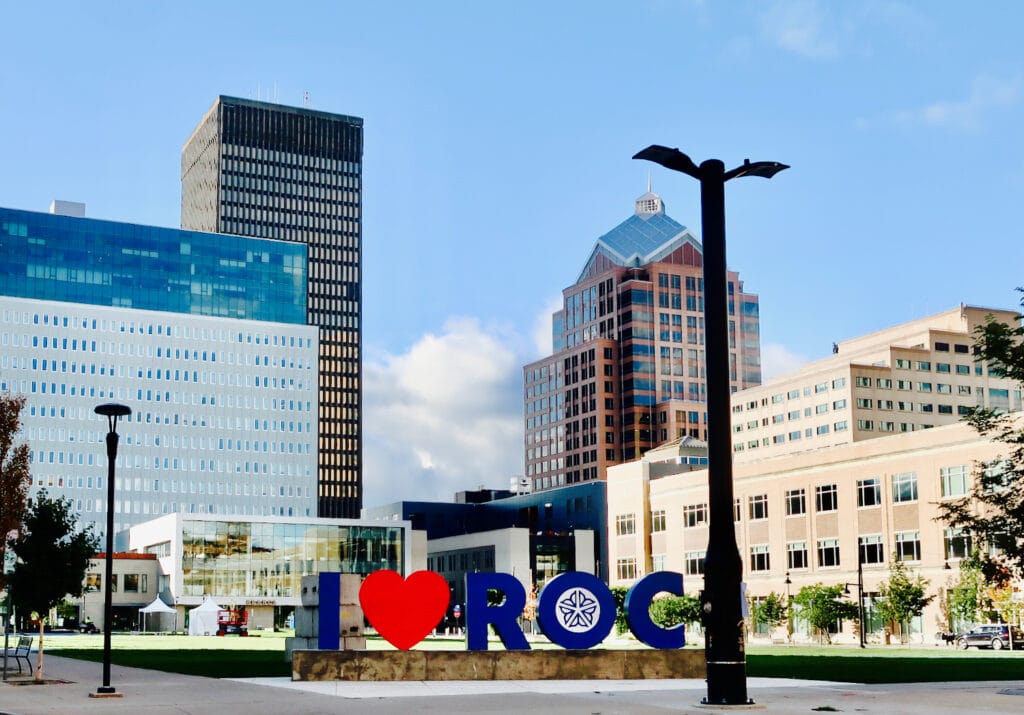
WHY GO: There’s so much to do in greater Rochester NY, it’s tough to keep up with it all. Suffice it to say that the city best known for the Erie Canal, George Eastman – of Eastman-Kodak fame – Susan B Anthony, and several top Universities, has gone through a recent resurgence.
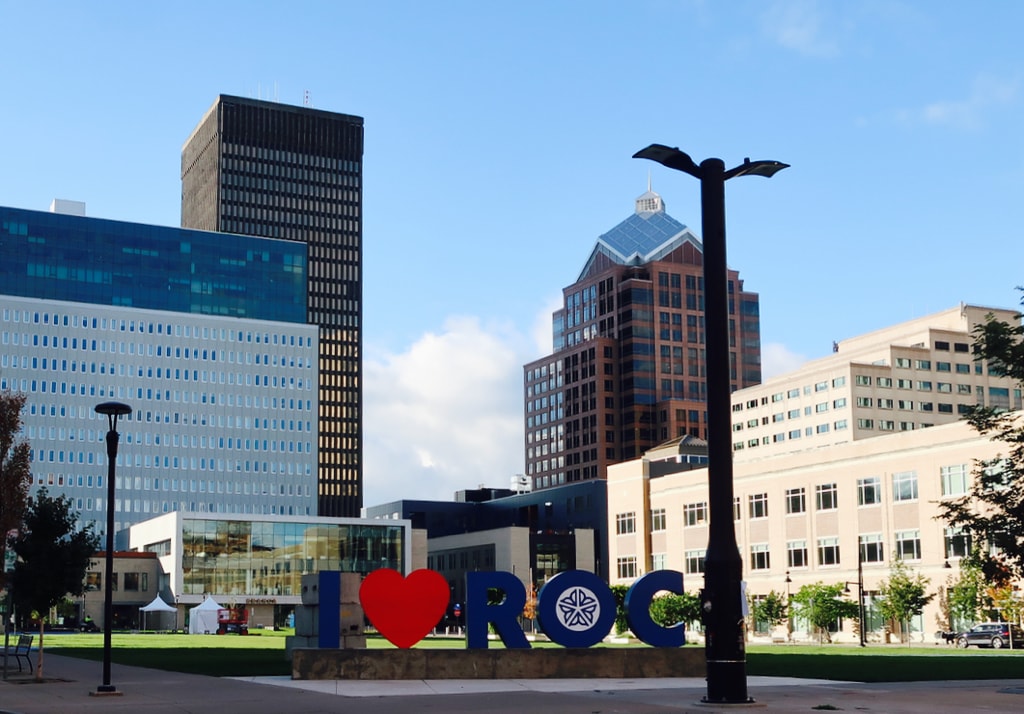
Downtown is bursting with activity, as the recent Strong Museum of Play expansion has added more fun to the area. The “Neighborhood of Play” has brought a whole new young demographic, with their unbounded energy, to downtown Rochester.
But you can’t visit Rochester without a visit to Susan B. Anthony’s home – getting the recognition it deserves. Anthony is buried in Rochester, near the final resting place of her friend and fellow Abolitionist and Suffragist, Frederick Douglass.
Anthony, Douglass, Elizabeth Cady Stanton, Harriet Tubman, and Mark Twain all gravitated to the Western New York region, then a hotbed of Civil and Women’s Rights activism. It still is.
We’ve added nearby towns – Genesee and Pittsford that have several can’t miss attractions. So, see what both new and old in this upstate NY city below.
Things to Do in Rochester NY
TOUR: Susan B. Anthony’s House,Rochester NY
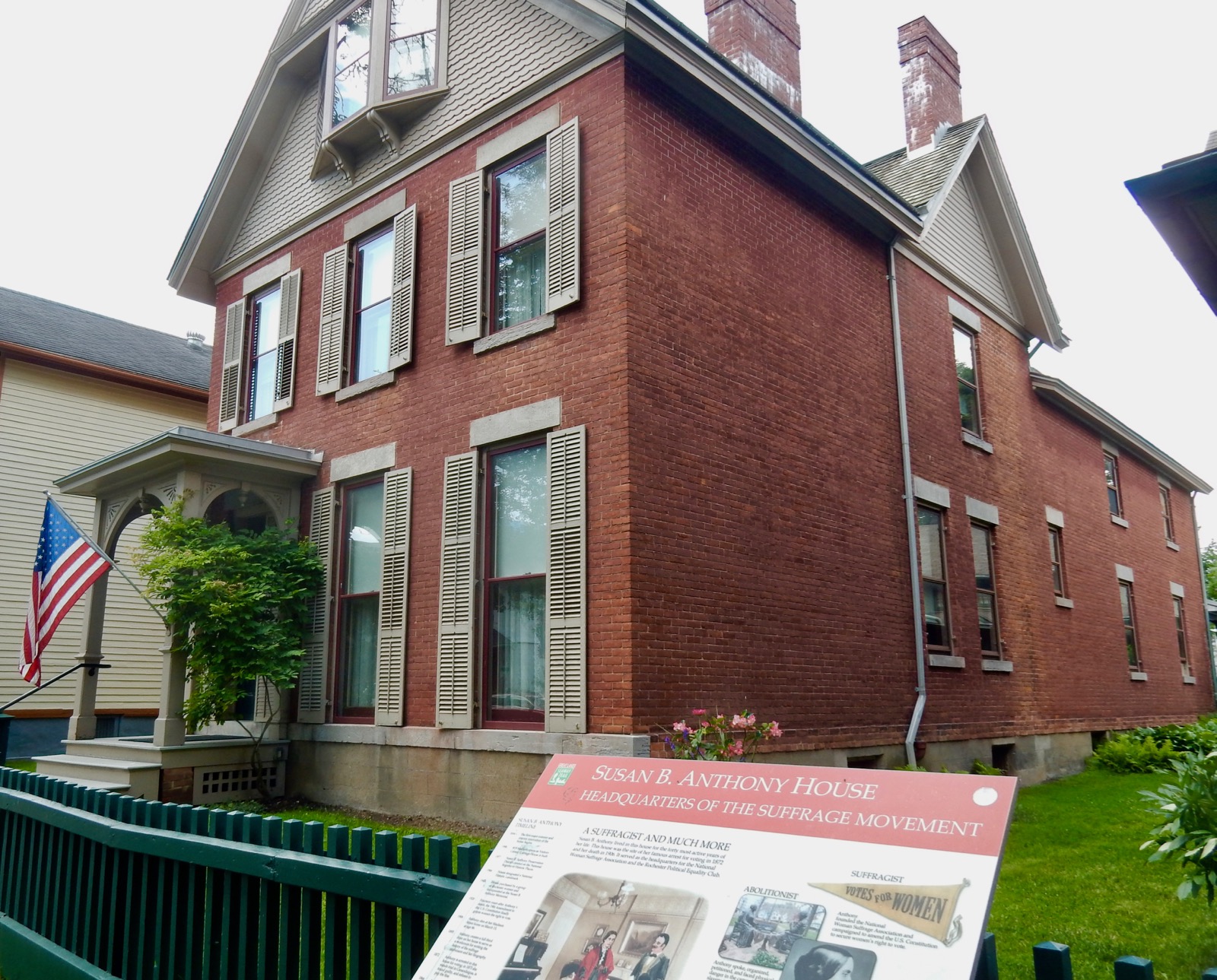
Susan B. Anthony’s House and Museum, preserved on a leafy Rochester NY street lined with tidy Victorian homes, honors the face of the Women’s Suffrage Movement in the USA. Anthony never married, although she was asked 7 times. She never had children. And she was the outgoing Yin to Elizabeth Cady Stanton’s scholarly, but quiet Yang.
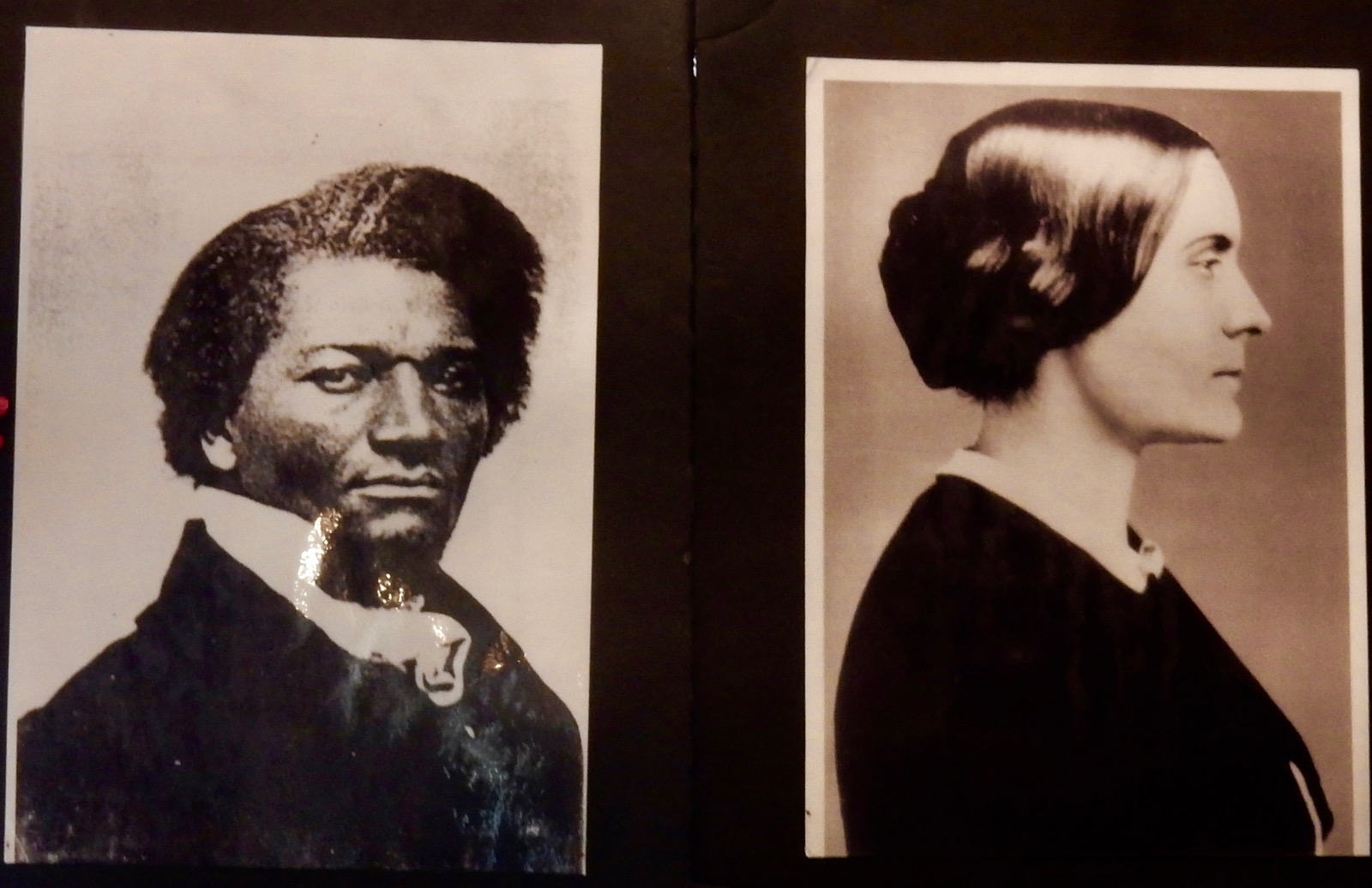
Anthony, born in Adams, MA in 1820, came to Rochester NY with her family of Quaker Abolitionists, involved in both the anti-slavery and Temperance movements. Upstate NY was a hotbed of activists. Just 70 miles from Canada across Lake Ontario, it was a final stop on the Underground Railroad.
Frederick Douglas, who had purchased his own freedom, settled in Rochester after the Civil War. He wrote his memoirs, Narrative of The Life of Frederick Douglass: An American Slave, here. Due to mutual interests, Douglass and Anthony became friends.
A tour of Anthony’s home begins next door where her sister, Hannah, lived. After a short orientation and glimpse at a small exhibit, you’ll step on the same bluestone sidewalk, installed in the mid 1800’s, that the Anthony’s did. Built in 1859, Susan’s home is not grand. But of course it holds plenty of tales, and many are told on this tour.
A Chance Meeting
In the mid 1800’s, women had no financial rights, no control over their own children, and were banned from speaking in public. Susan B. Anthony, however, focused on abolishing slavery and alcohol, not women’s rights.
All that changed at a chance meeting on a street corner in Seneca Falls NY, where Anthony was breaking the law by speaking out in public against slavery. Amelia Bloomer (inventor of the garment that would liberate women from tight corsets and skirts) introduced Anthony to the quiet thinker and writer, Elizabeth Cady Stanton. Stanton, a mother of seven children, was the author of the Declaration of Sentiments – a parallel pro-women Declaration of Independence presented at the July 19, 1848 Women’s Rights Convention.
In Walked the Lady With the Alligator Purse
Melding strengths, Anthony and Stanton became a force to be reckoned with. Anthony babysat for Stanton’s children while Stanton worked on her inspiring essays and speeches. Anthony would deliver these rousing speeches on tours throughout the country.
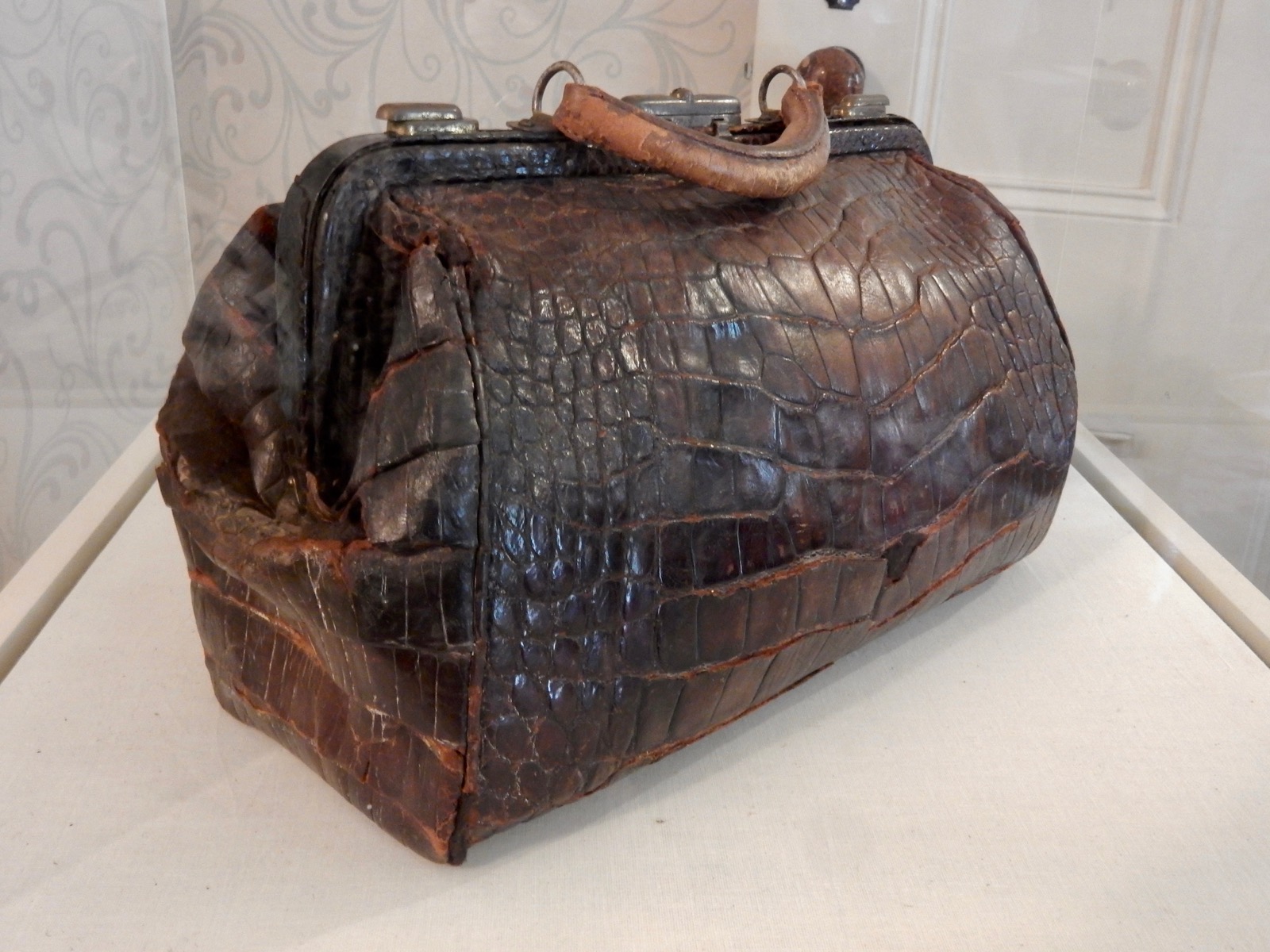
Anthony’s office, in which she wrote 50 letters a day, was on the 2nd floor. See her famous alligator purse, purportedly the subject of the children’s rhyme, “Miss Lucy Had A Baby.” Some say it was Susan’s signature to quickly identify her in a crowd.
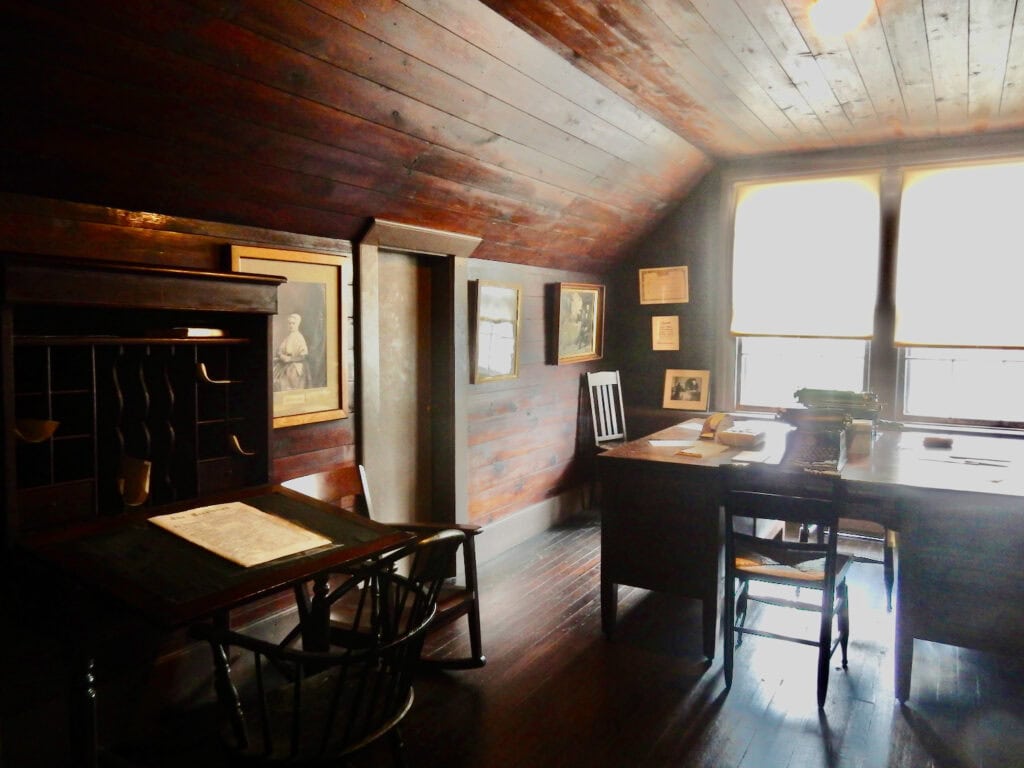
The third floor – dubbed the War Room – has the most residual juju. It was here, in Rochester NY, that some of the most influential women of the day gathered to plot next moves and write burning compositions to inspire and agitate. You can almost feel the energy up here.
Susan B’s Illegal Vote
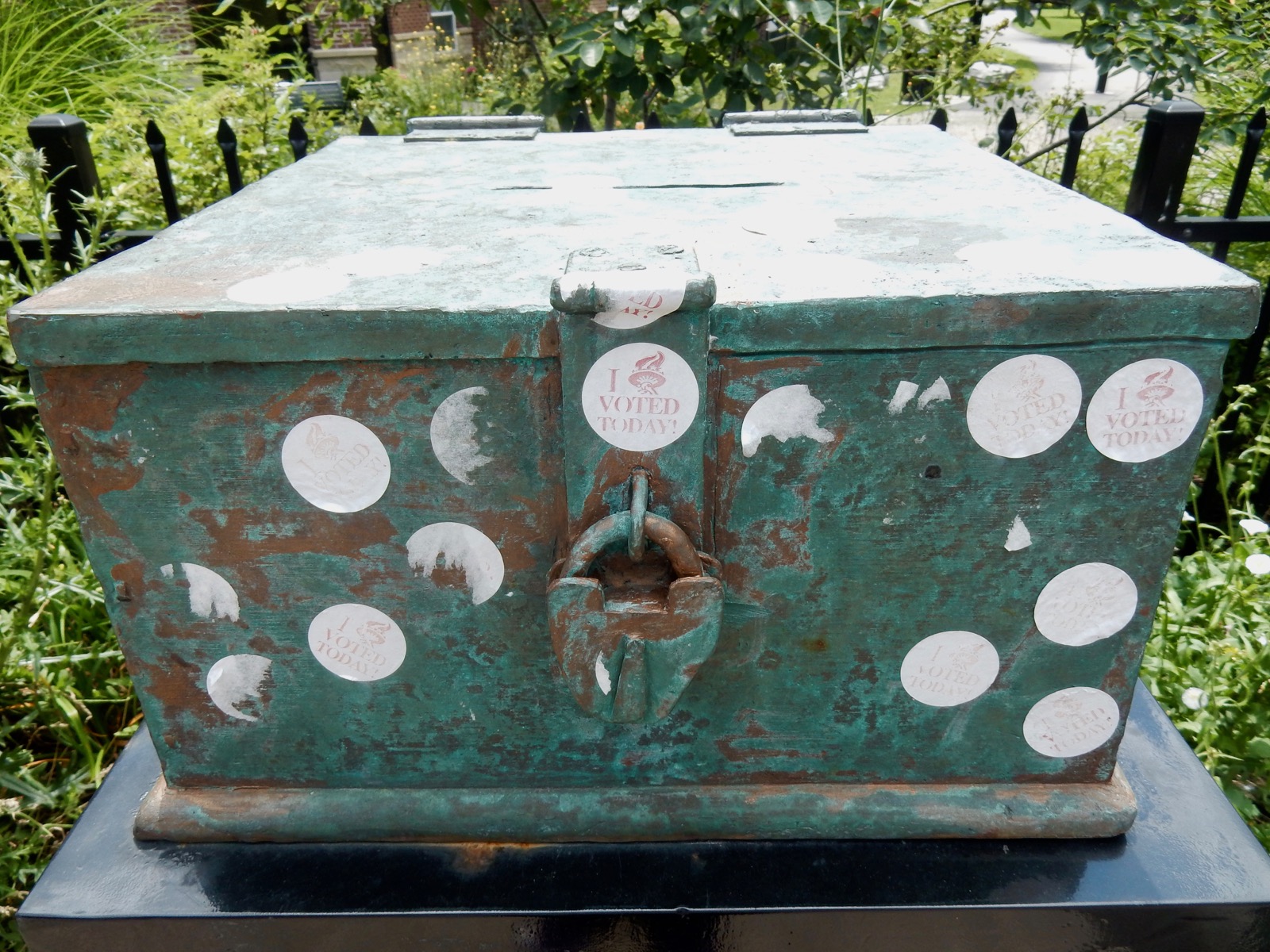
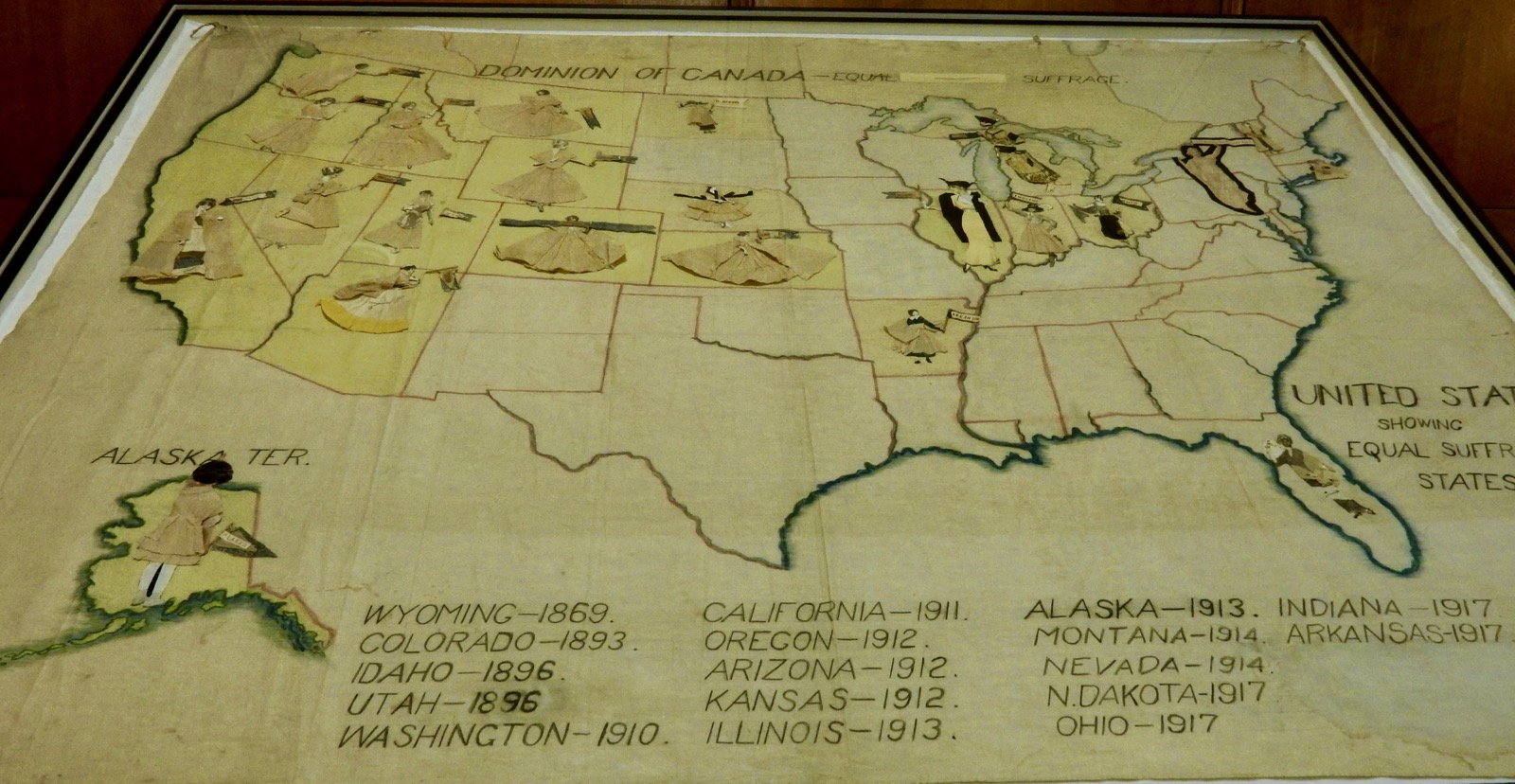
Lastly, as you stand in her front parlor, hear how Anthony was arrested in this very room. In 1872, after Black men had won the right to vote, Anthony used the 14th Amendment – US Citizens shall not be deprived of life, liberty or property – to argue this right for women.
She used this argument on a young fellow overseeing voter’s registration at a barbershop down the street. He relented. Though 15 other women voted (with proper registration) that day, she was the only one arrested.
Before her trial, Anthony traveled from town to town, asking in a rousing speech, “When is it illegal for an American Citizen to vote?” On the day of her trial, however, the judge forbade Anthony to speak on her own behalf.
She persisted and spoke anyway, reciting again her “American Citizen” speech to a courtroom packed with reporters. It was a turning point in the Women’s Suffrage movement. And yes, her vote for Ulysses S. Grant did count.
Susan B. Anthony never lived to see the passage of the 19th Amendment in 1920. She died at age 86 in 1906, her funeral packed with 10,000 mourners. Check website for tour dates, times, and ticket costs.
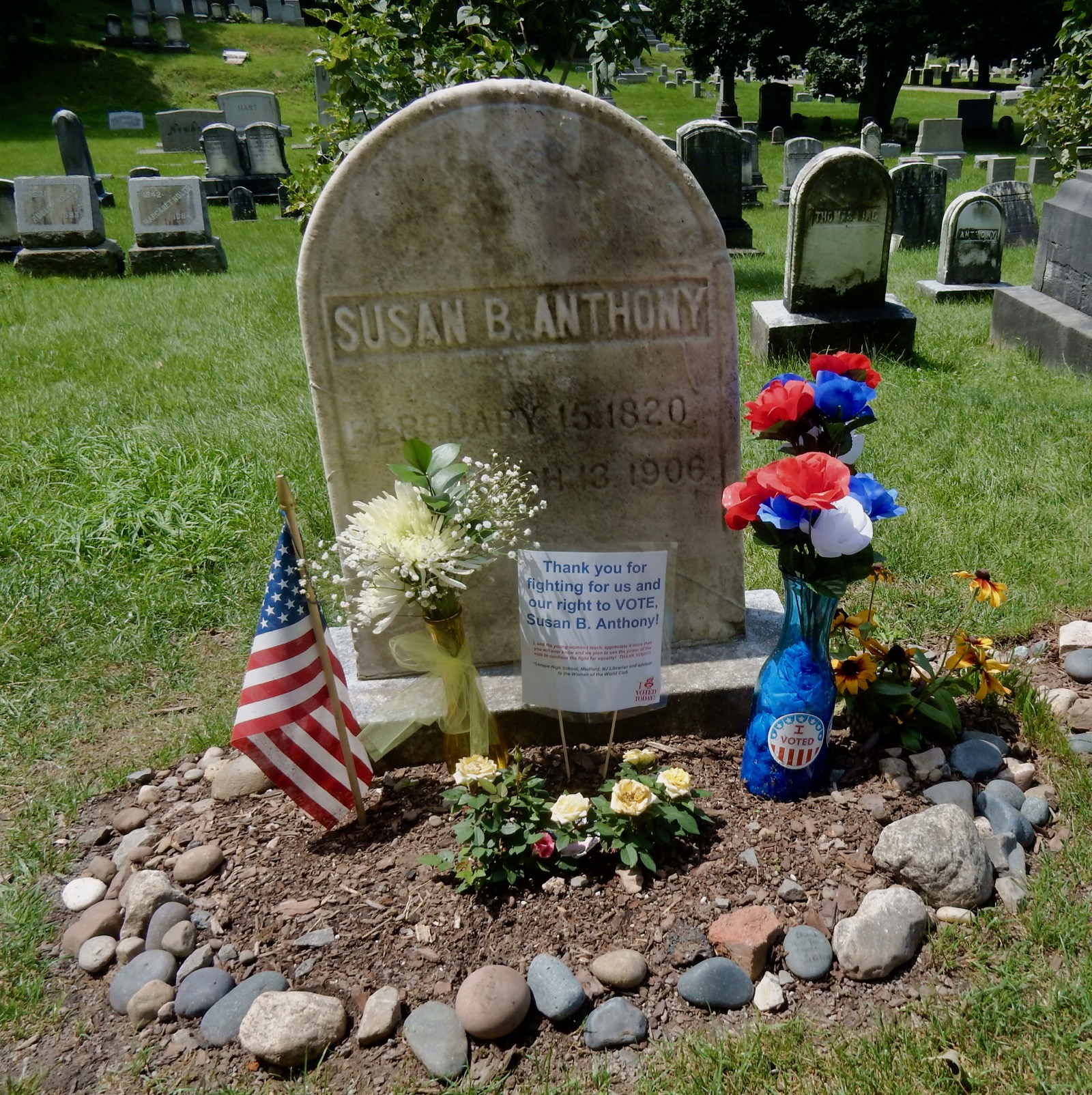
VISIT: Mount Hope Cemetery for the final resting places of two American heroes – Susan B. Anthony and Frederick Douglass
Every four years, on Election Day, several hundred women make a pilgrimage to SBA’s grave at Mount Hope Cemetery in Rochester NY to place “I Voted” stickers on her tombstone. On Nov. 8th 2016, so many men and women showed up (some estimate 10,000), it made national news.
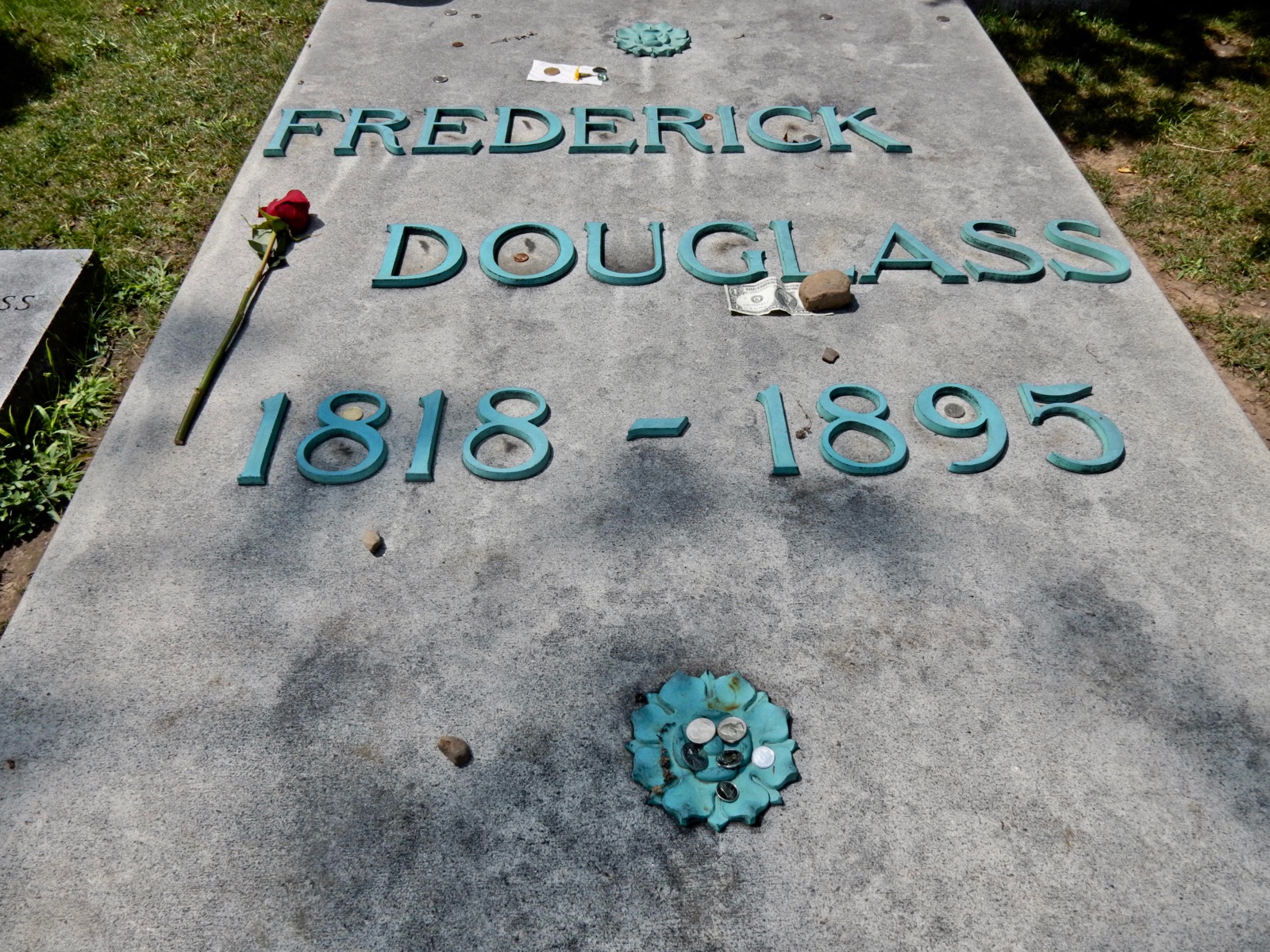
A commemorative inscription near the grave of Frederick Douglass reads: born 1818, died 1895; Escaped Slave, Abolitionist, Suffragist, Journalist and Statesman; Founder of the Civil Rights Movement in America.
VISIT: George Eastman Museum
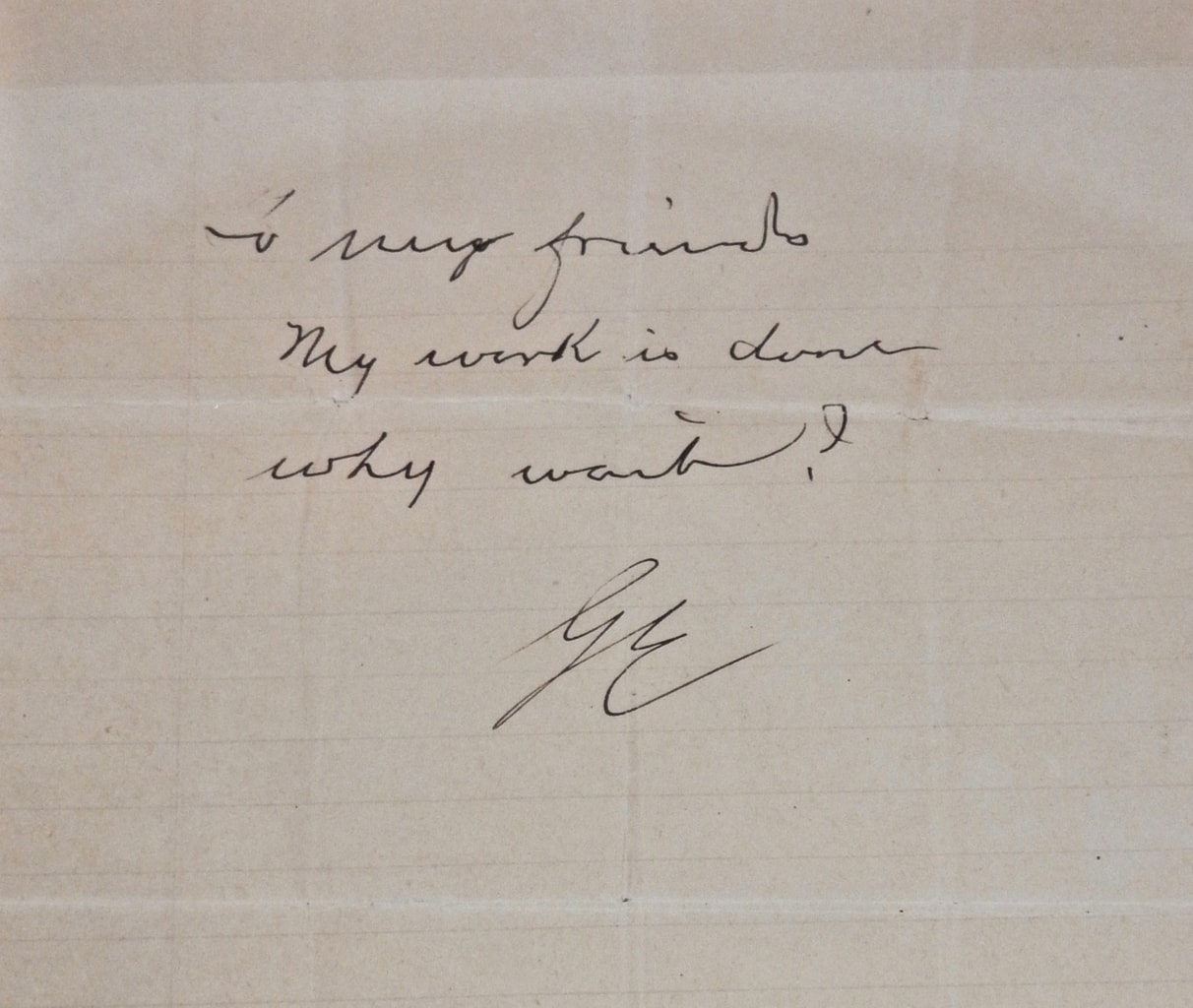
Though the George Eastman Museum holds the world’s leading collection of photographic and cinematographic technology, one of the most jarring artifacts in the home of the “pioneer of popular photography and motion picture film,” isn’t a photograph. It’s the nine-word note Eastman left at age 77, when, in declining health and suffering from spinal stenosis, he took his own life. “To my friends: My work is done. Why wait?”
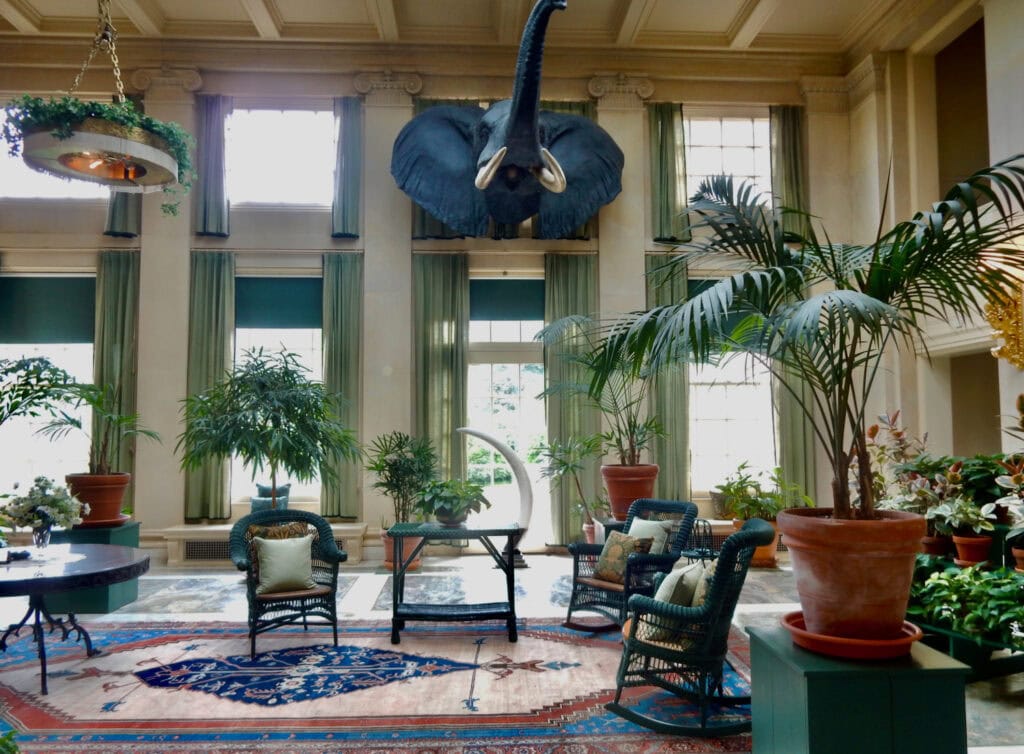
George Eastman Home
But, oh what work it was. Born in 1854, Eastman established his first “Dry Plate” company in 1881 after inventing an emulsion that allowed photographers to capture pictures without having to haul a complete “wet” darkroom for remote shots.
An entrepreneur and marking genius, Eastman made up the word “Kodak” in 1888 to sell a new product that no-one had ever seen before: a roll-film camera. “You push the button, we do the rest.”
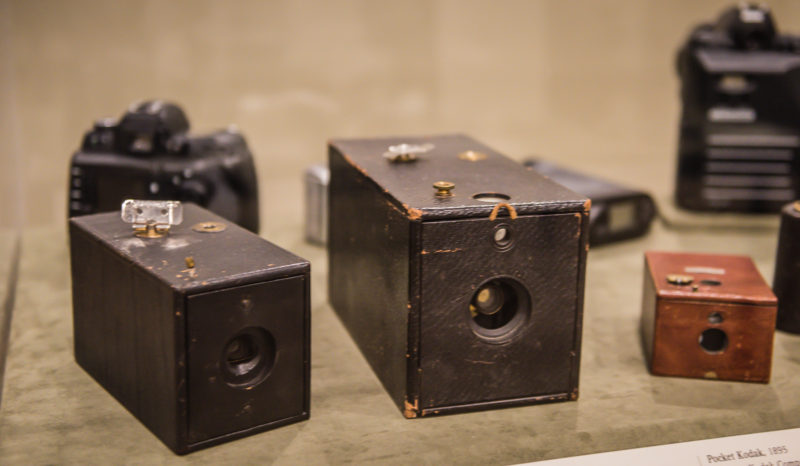
You’ll learn all about Eastman’s invention, and how this man, born to parents of modest means, lived his life, on a tour of the home that serves as a museum as well.
A life-size copy of the elephant he shot on his first African safari at age 72 takes center stage in a sunny central solarium. Upstairs in his living room – which also served as his office – a portrait of his mother looms over the desk on which Eastman changed his will and wrote his very last words.
Start in the Visitors Center
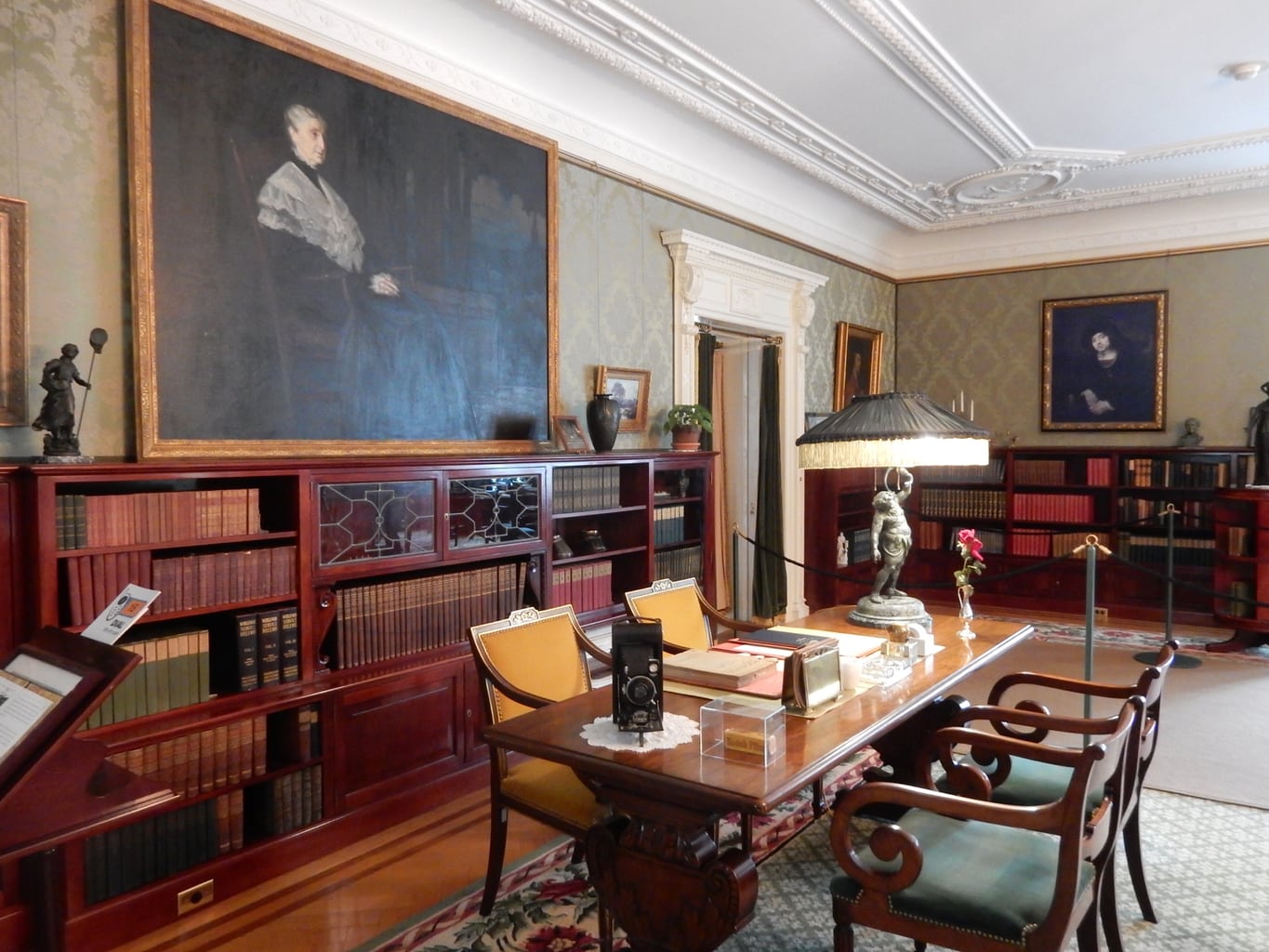
Guests enter into the brand new Visitor’s Center, opened in 2020, which replaced the one in the back of the museum.
You begin your tour with the history of Photography: historic cameras under glass that may well include the very one used to take the iconic raising of the flag photo on Iwo Jima.
The 500-seat Dryden Theater, built in 1951 within the mansion complex, is the only theater in the world equipped for the projection of original nitrate film. It screens movies on a regular basis. The museum also offers hands-on workshops in historic and alternative film processes. Register online. Check website for dates/hours open and admission and tour fees.

VISIT: The Strong National Museum of Play
Logic would dictate that a museum devoted to play is fun for kids, boring for adults, right? Nothing can be further from the truth. The Strong National Museum of Play is a madcap, frenetic, humongous temple of toys that sprang from the toy chest of buggy whip company heiress, Margaret Strong in 1968 (originally in her home).
Needless to say, this museum, opened to the public in 1982, updated with stupendously interactive “exhibits” (indoor ropes course, anyone?), is “family friendly.” But it also transports adults back to childhood, with cherished playthings of yore that serve as conversation starters.
Changes In the Last Few Years
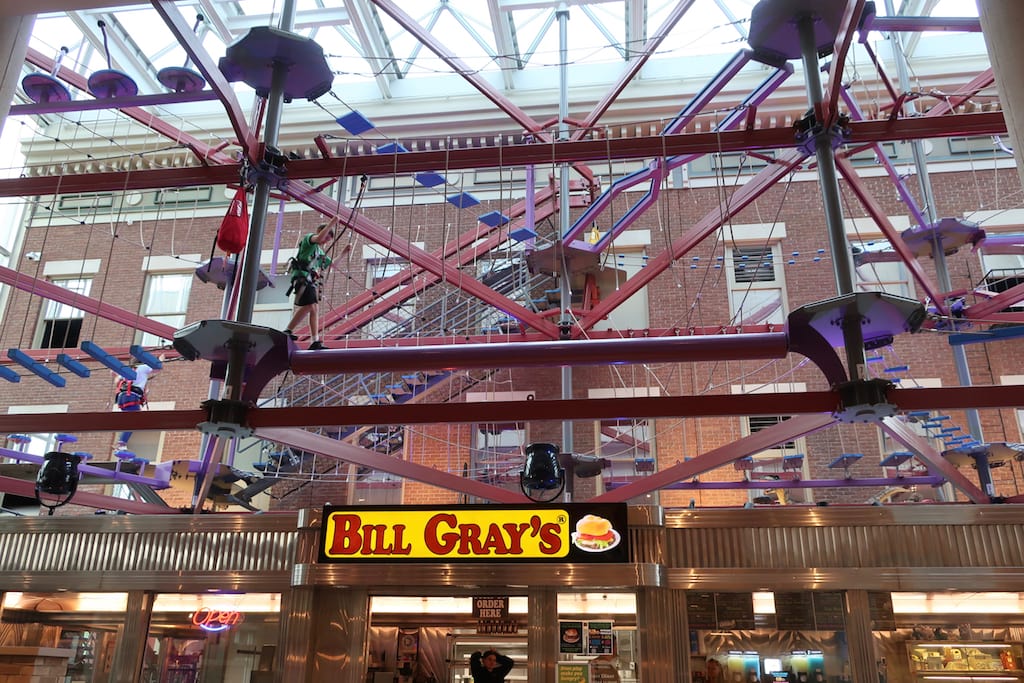
Most exciting within the Strong Museum itself is the Skyline Climb, a two-level indoor High Ropes and Adventure Course – with zip line and lots of swinging ladders and springy bridges – and a low-rise course for toddlers. It’s just $10 for non-members for unlimited time (although the typical time spent is 45 minutes), and best of all open during inclement weather as it’s inside!
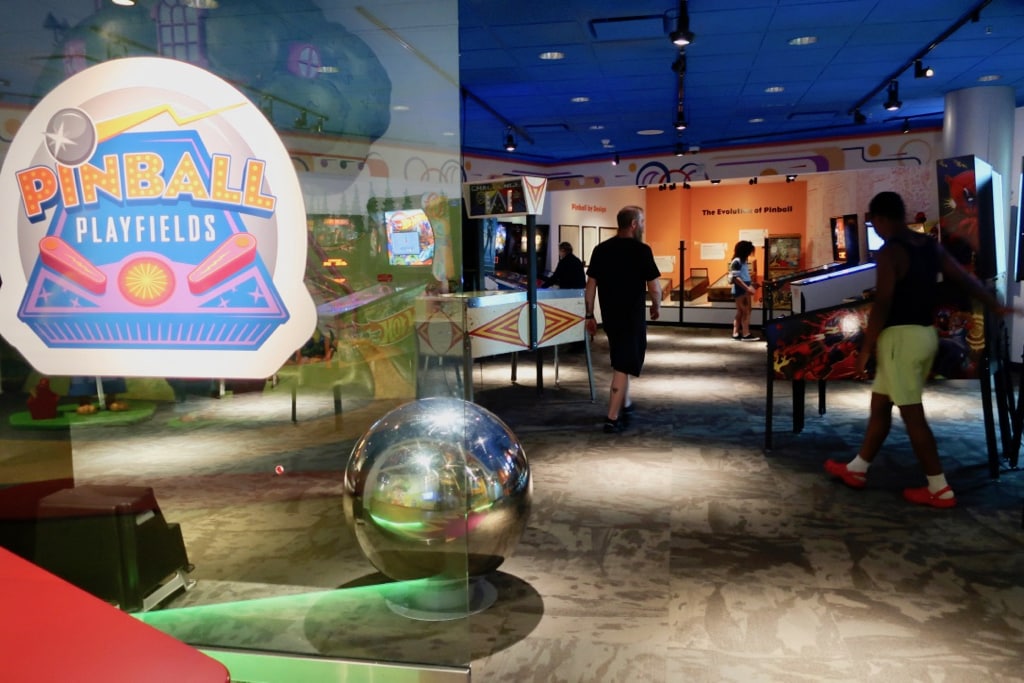
Play your way thru pinball history in the Pinball Playfields room. The oldest pinball game, from 1931 (not playable) had actual pins around the holes, and was considered an illegal adult gambling game. (Minimal fee to play).
The interactive Play Lab allows your budding builders and architects to hone their skills; with construction and art supplies, tools, Legos, and staff to assist.
Sit on the Sesame Street Stoop
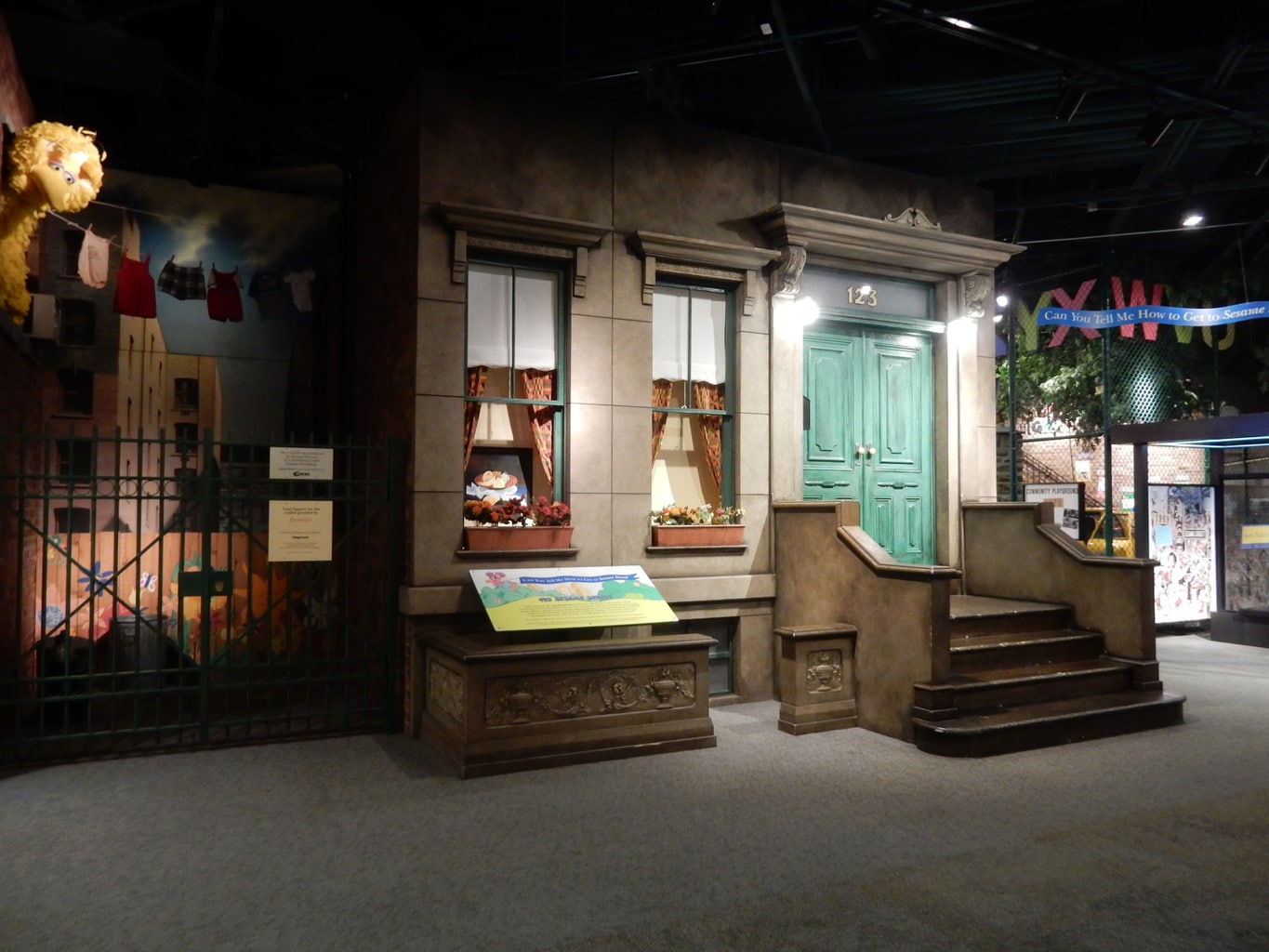
The first floor skews younger. Here you can sit on the famous front stoop of Sesame Street, wait for a Muppet Taxi, and join in at a Dance Lab. In Imagination Destination, press colorful lit-up buttons on the bridge of a star ship and pilot a rescue helicopter.
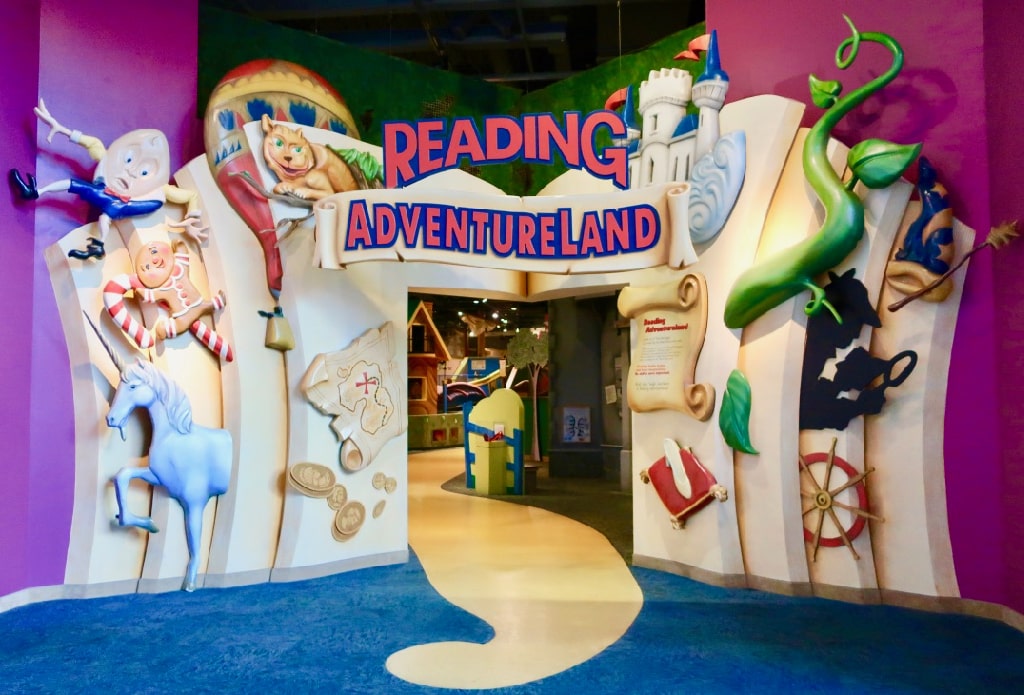
Enter the “World’s Largest Pop-up Book” in Reading Adventureland where beloved two dimensional characters come to life.
Butterfly Garden
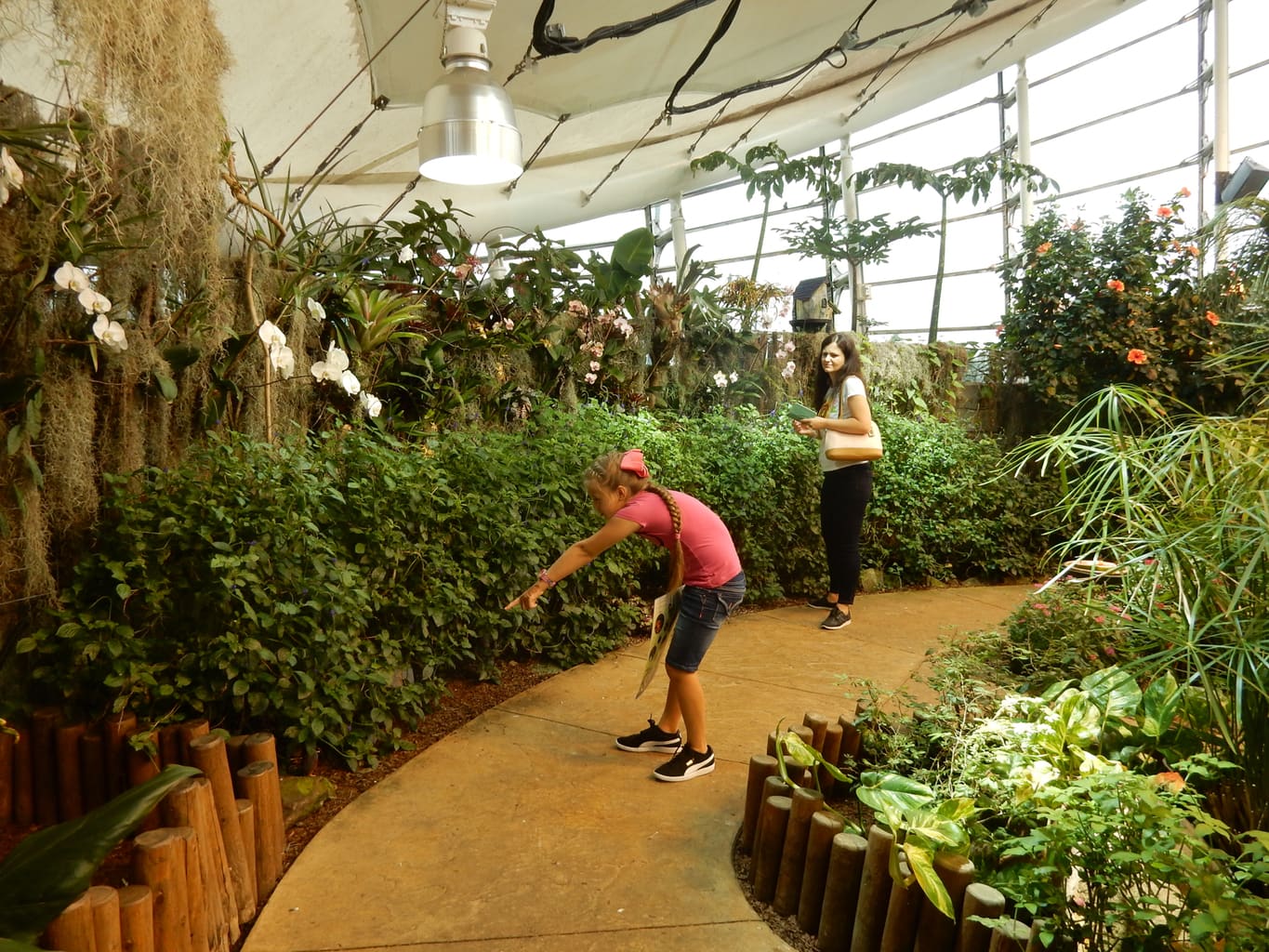
The Strong has one of the best butterfly gardens I’ve ever seen (and I’ve been to many). Tiny Chinese Button Quail run underfoot as vibrant butterflies flitter around their spa-like sanctuary that boasts water features, orchids, and piped in calming music.

Toy Hall of Fame
The second floor consists of the Toy Hall of Fame. It’s here that adults get downright nostalgic. Past honorees have included the Wiffle Ball, Clue, and Etch A Sketch. But other choices have caused some controversy. Paper airplanes, cardboard boxes, balls, and just plain ole sticks prompted Jon Stewart to gripe, with hilarious aplomb, on the Daily Show.

An interactive “Bubble Wall” allows users to pop virtual bubbles, and take personal photos that show up inside them. The larger – than – life Etch A Sketch will draw your portrait and send it to you via email as a gif.

The America At Play exhibit generates the most Boomer memories. Yes, there’s Candyland, Shoots and Ladders, Battleship – the icons of childhood. But other more obscure board games tended to monetize the zeitgeist of the time. During the Cold War and Space Race, there were lots of guns, planes, action figures, and at least one game called “Missile Arsenal.”
“Firsts” in Toys
The Strong also owns several “firsts.” It’s got the original 1933 hand-drawn (round) Monopoly Game, which Charles Darrow sold to Parker Bros. (good move), and the very first Barbie Doll.
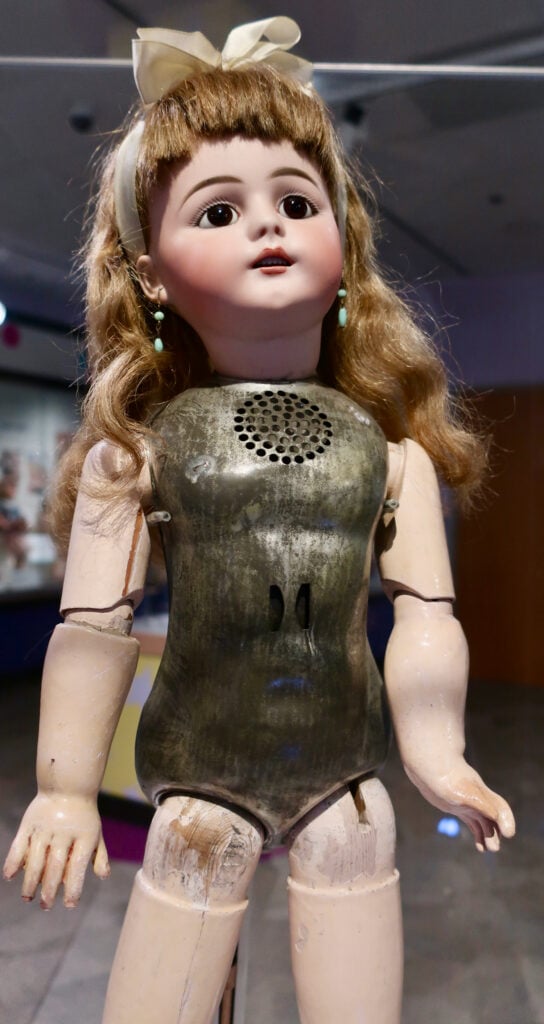
But the most disturbing toy is Thomas Edison’s 1890 “Singing Doll.” The figure, with a perforated steel torso, is scary enough. But Edison recorded kids belting out several nursery rhymes, and the resulting screechy static terrified listeners. You can listen to some online or here. Check website for hours/dates open and cost of Butterfly Garden, and General Admission.
VISIT: Memorial Art Gallery
Founded in 1913, and affiliated with the University of Rochester, the comprehensive museum of art – the Memorial Art Gallery – encompasses many galleries on two floors and out into sculpture gardens. Contemporary pieces hang next to the originals that informed them.
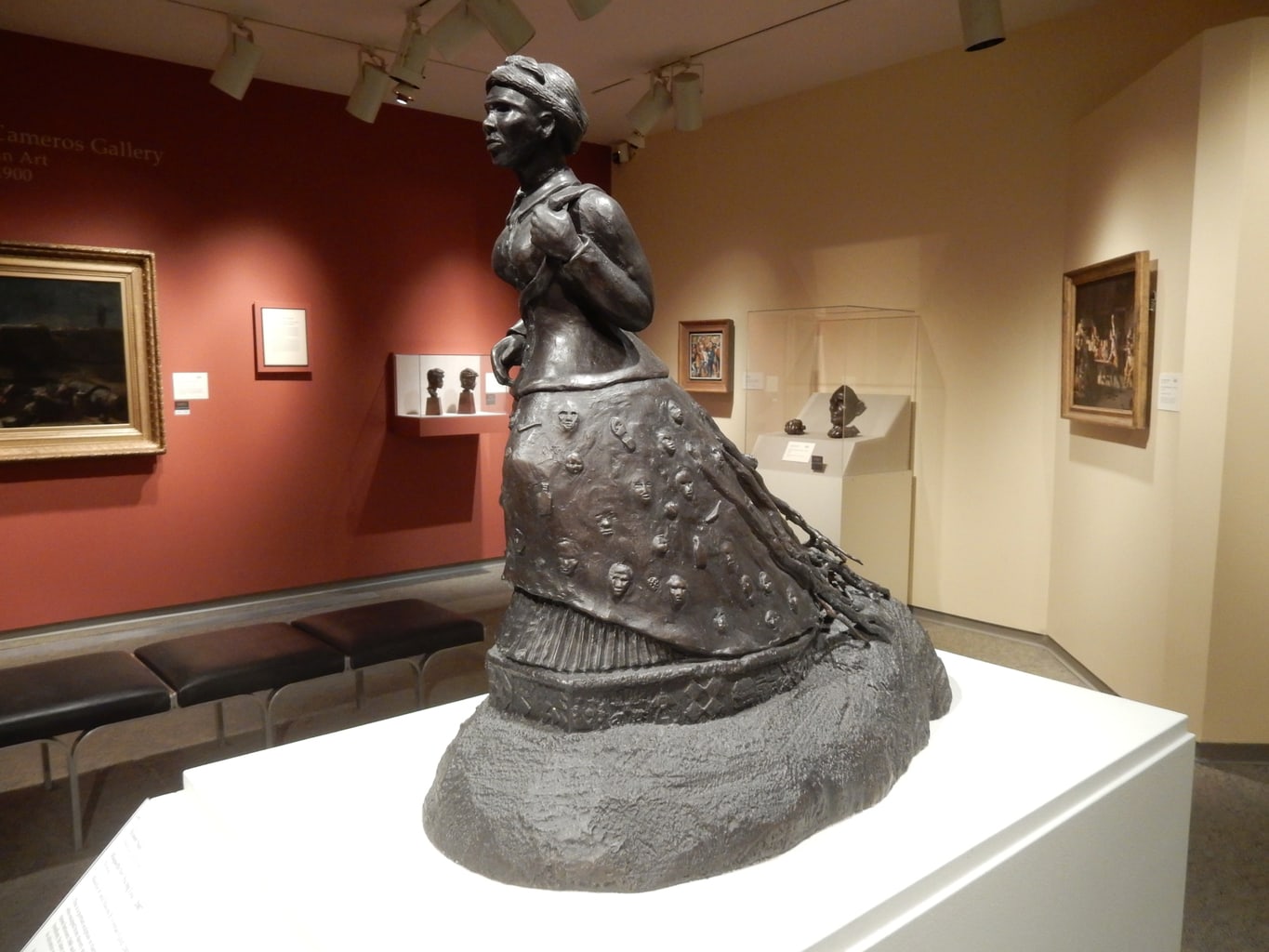
There’s a small sculpture of Harriet Tubman (a full size stands in Harlem, NY), “Ashcan Art” – renderings of everyday life, Yayoi Kusama’s Pink Venus, Georgia O’Keefe, Degas, Cezanne, Hockney, European, Islamic, Asian – art from all over the world.
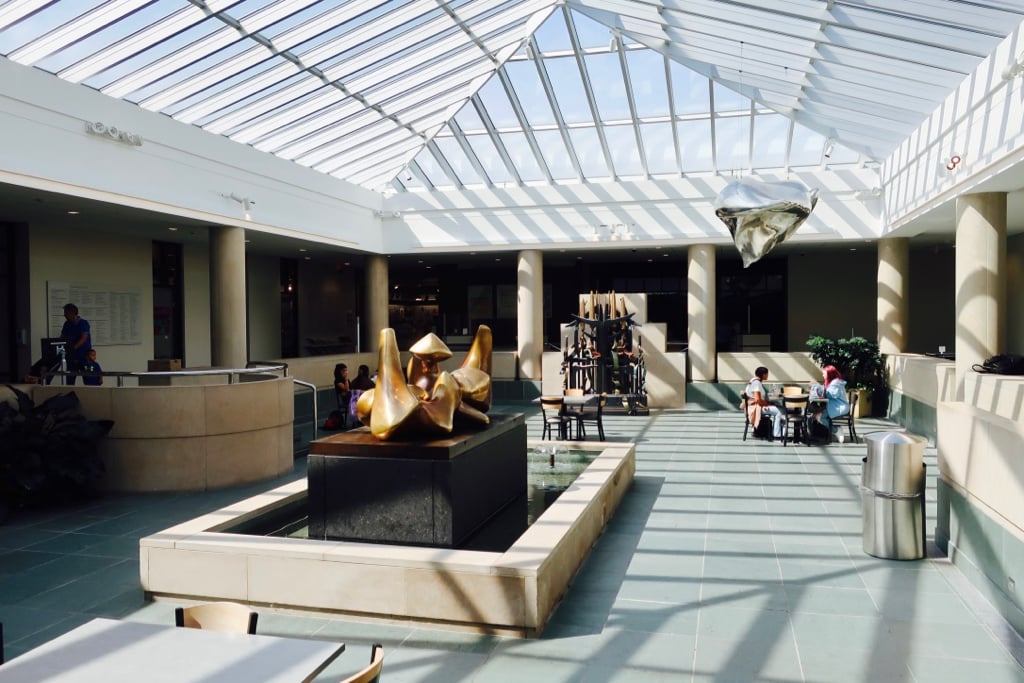
MAG introduced Centennial Sculpture Park in 2013 to mark its 100-year anniversary. Phase 2 is transforming the remaining two acres of open lawn along University Avenue by adding a number of sculptures, including several significant new acquisitions. Check website for hours/dates open.
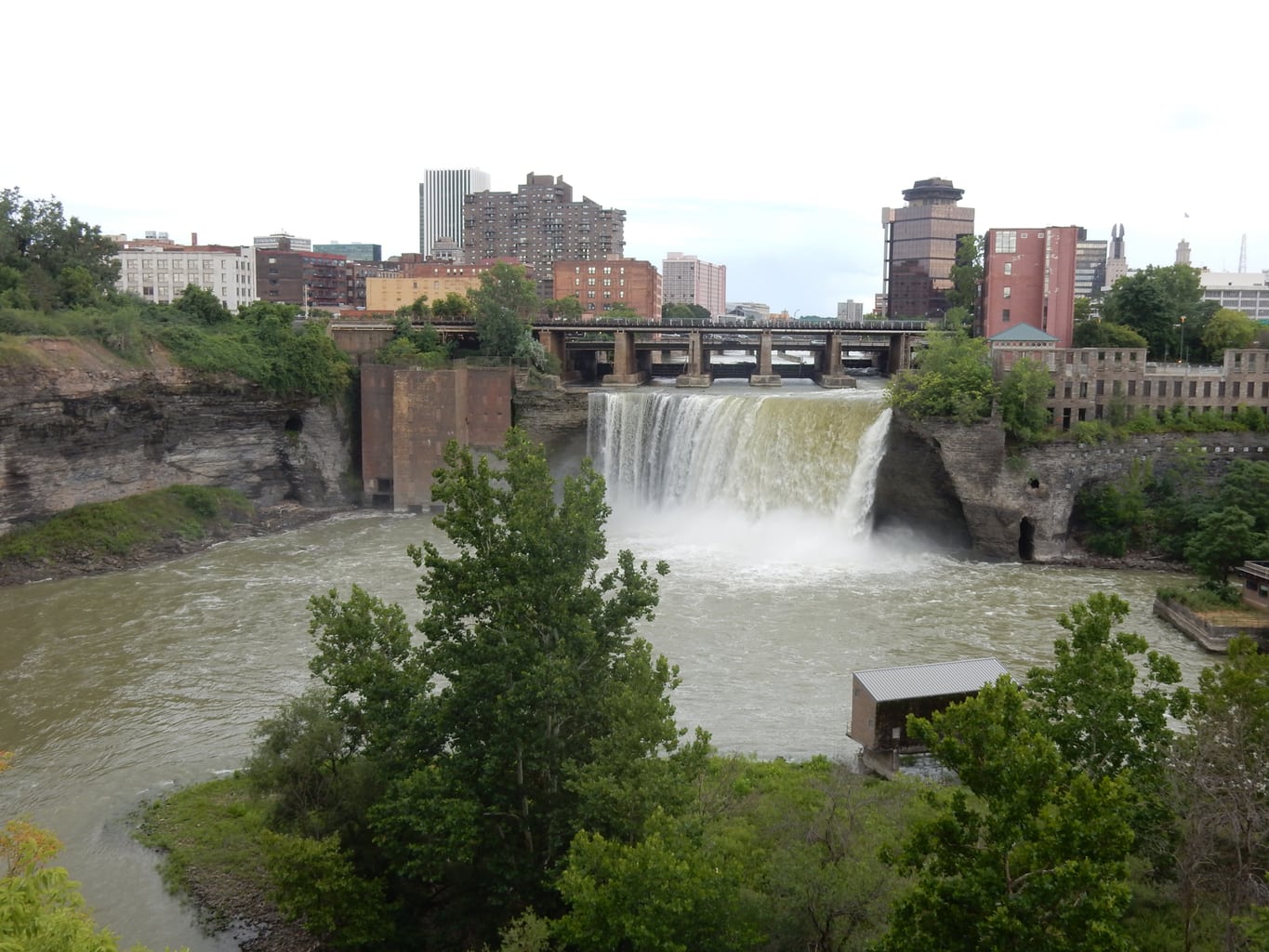
PHOTO OP: High Falls
It’s the waterfall right in the middle of the city, and makes a great backdrop for selfies or we-sies.
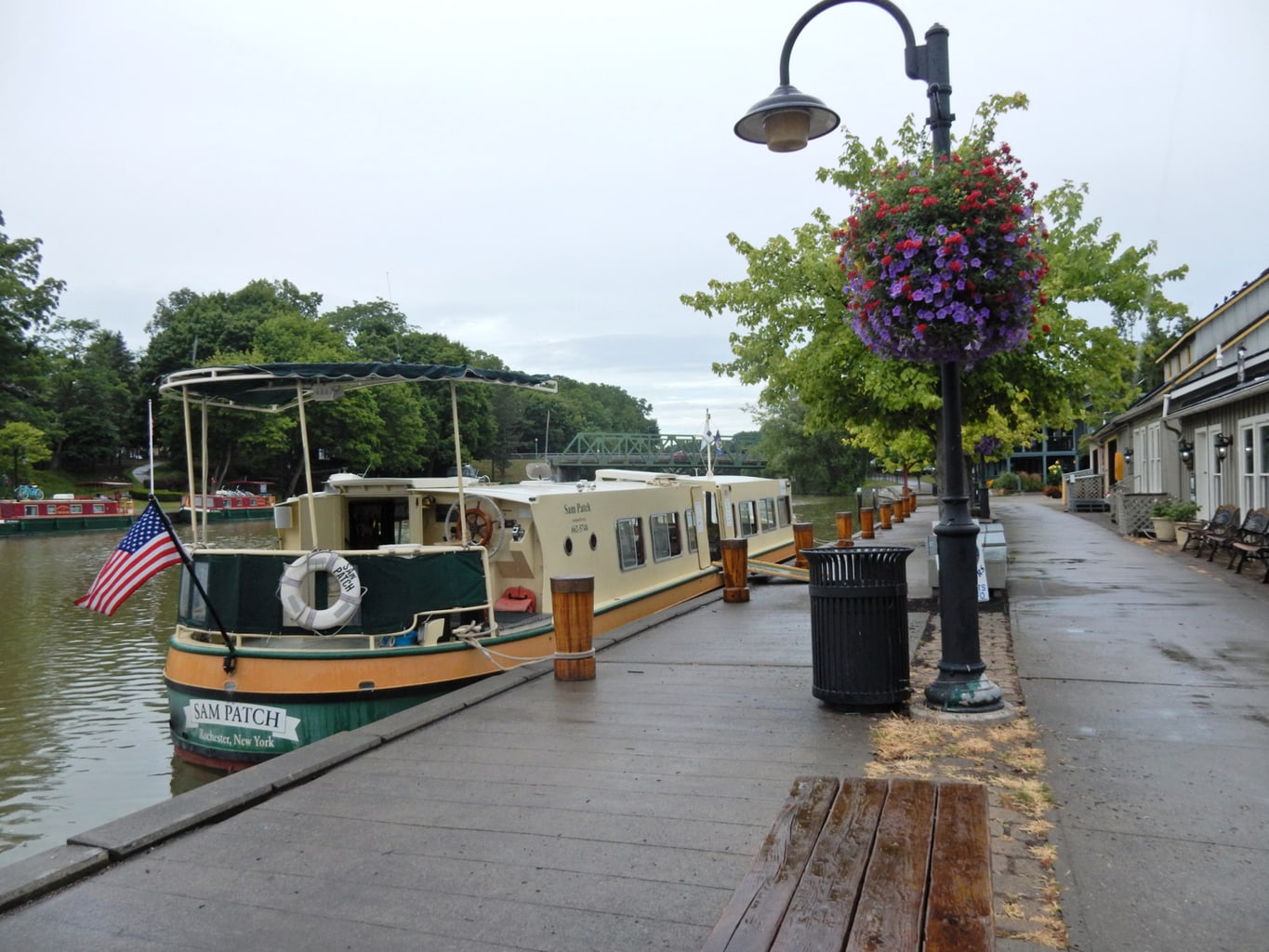
TOUR/BOAT: Sam Patch Canal Boat, Pittsford
Jump aboard the Sam Patch Canal Boat – a replica 1800’s Packet Boat – in Pittsford NY (20 minutes from Rochester) for a 90 minute cruise through Lock 32 of the Erie Canal. Along the way, you’ll learn all about the building of this waterway and its importance.
Greater Rochester NY school kids are required to learn the words to the 1905 song, “Fifteen Miles on the Erie Canal,” so instrumental is the history of this waterway to the region. The Erie Canal, declared a National Heritage Corridor, was built starting in 1817 to transport goods from the Atlantic Ocean to the Great Lakes. But it became nearly obsolete when completed in 1825.
“A little short of madness”
Constructed by laymen – not an engineer among them – the project was controversial from the start. Thomas Jefferson thought it “a little short of madness,” and cost prohibitive. All work had to be done by hand and pick-axes, as dynamite had not been invented yet, in an area so swampy that malaria killed over 1,000 workers.
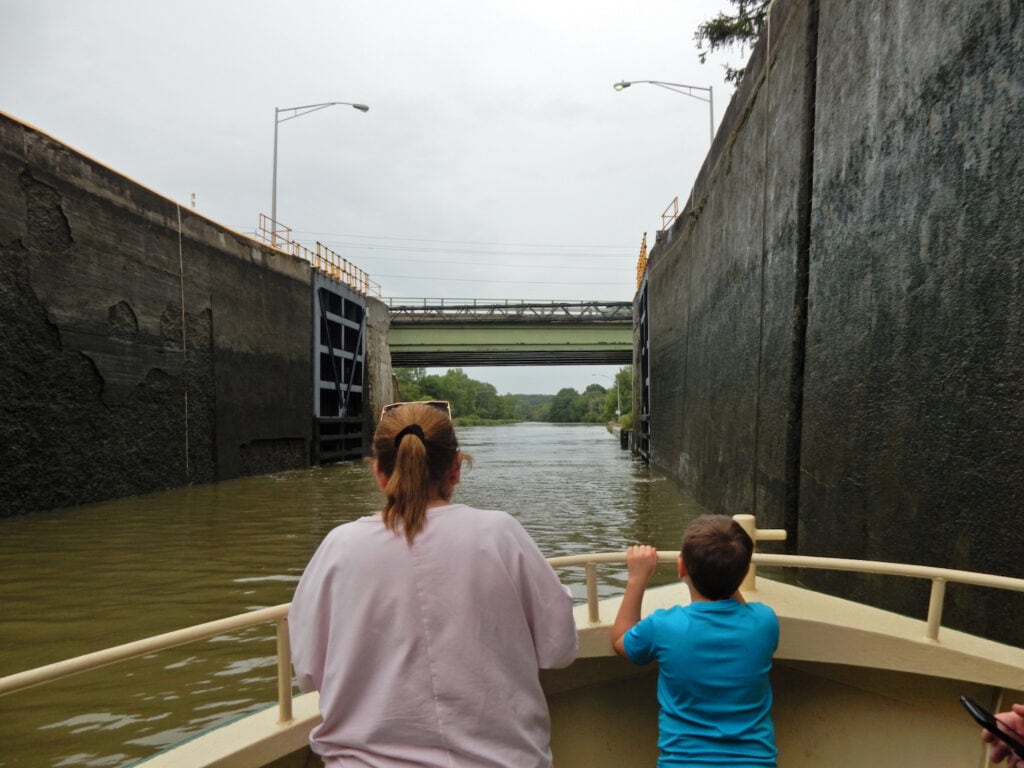
You’ll learn this and more as you travel a portion of the originally 40 ft wide, 4 ft deep 323 mile long canal – and into one of the locks that allowed early freighters to navigate these waters.
“NY is not flat, and boats don’t like going downhill,” our guide quipped. “The level change from one end to the other is the height of a 50 story building.”
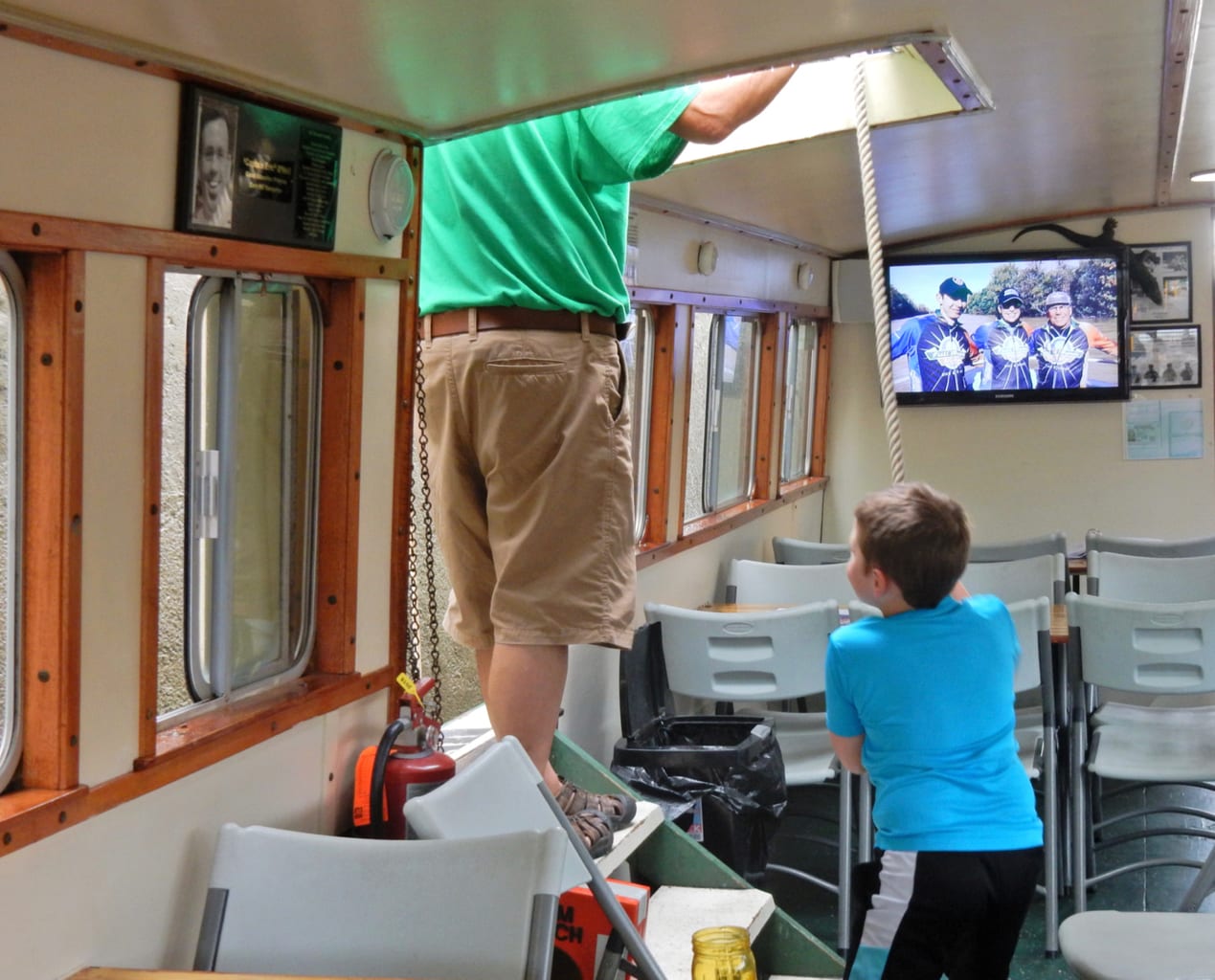
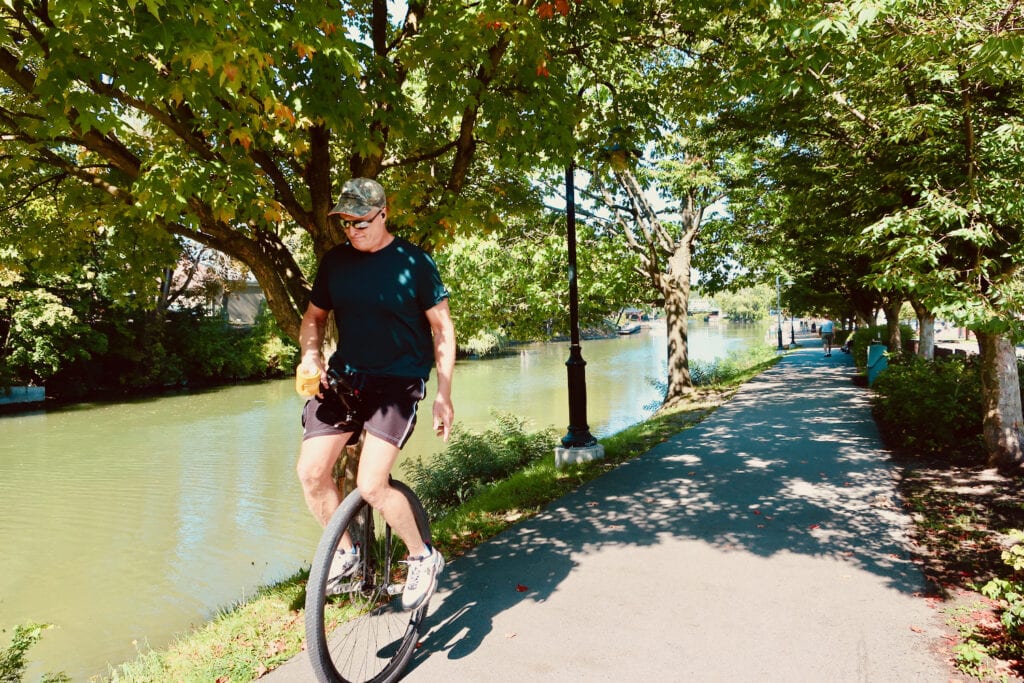
Now, the canal is three times as wide and three times as deep, yet still cannot handle the larger commercial ships built these days. Some barges still do come through, however. Most notably, in May 2017, a few barges piled with beer tanks for the expanding Genesee Brewery, caused quite a sensation in small Erie Canal towns. But, for the most part the waterway and Canal path alongside it are used for recreational boats, joggers, parents pushing strollers, and bicycles. Check website for tour times and ticket costs.
SHOP: Schoen Place and Northfield Common, Pittsford, NY
Before or after your Sam Patch Erie Canal Cruise, peruse some of the independent shops and coffee/brewing/food shops within steps of the canal path. Our favorites include:

Cleo and Kin
Lifestyle boutique with plenty of healthy-for -the-planet home goods and gift items.
Abode Rochester
Mid-Century modern furnishings and accessories, cool gifts, jewelry, and books.
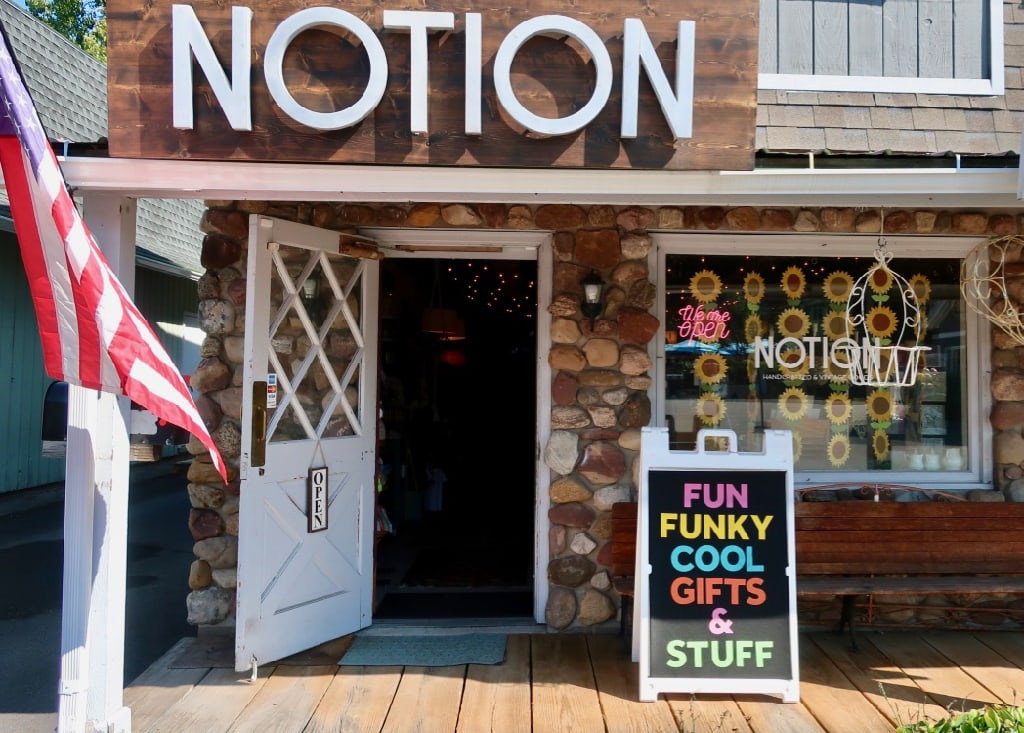
Notion
Bonnie Miguel opened Notion showcasing the work of 7 artisans during the pandemic to augment her primary business, Miguel Creative. Those initial seven artisans burgeoned into into 75 craftspeople – all from the Rochester area.
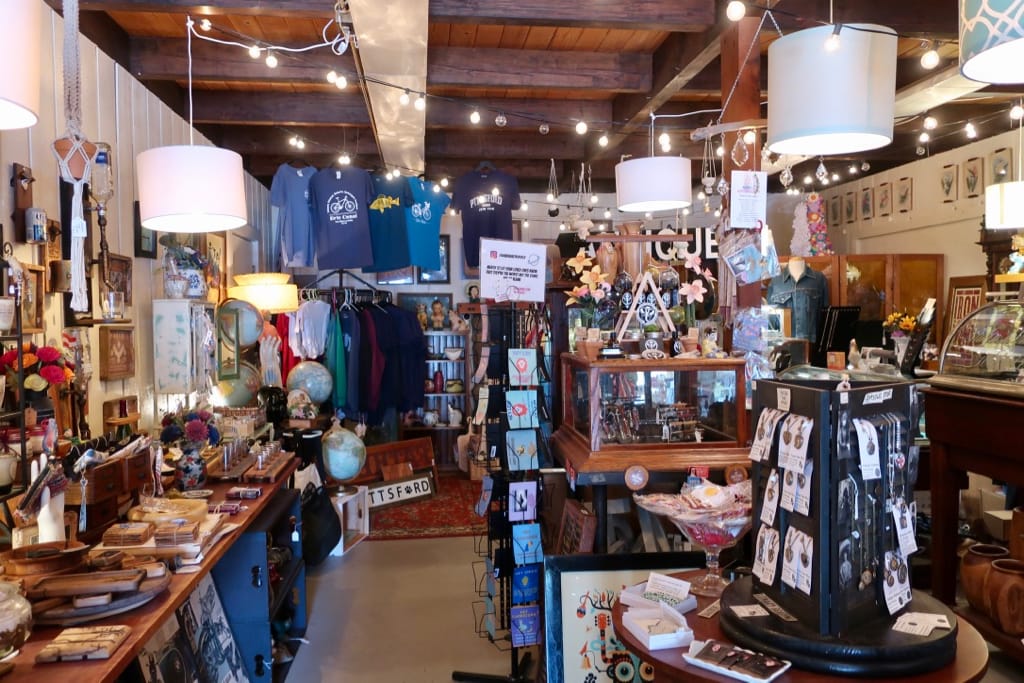
Most items are one of a kind. Find clothing, home goods, greeting cards, and more – from classic to delightfully raunchy.
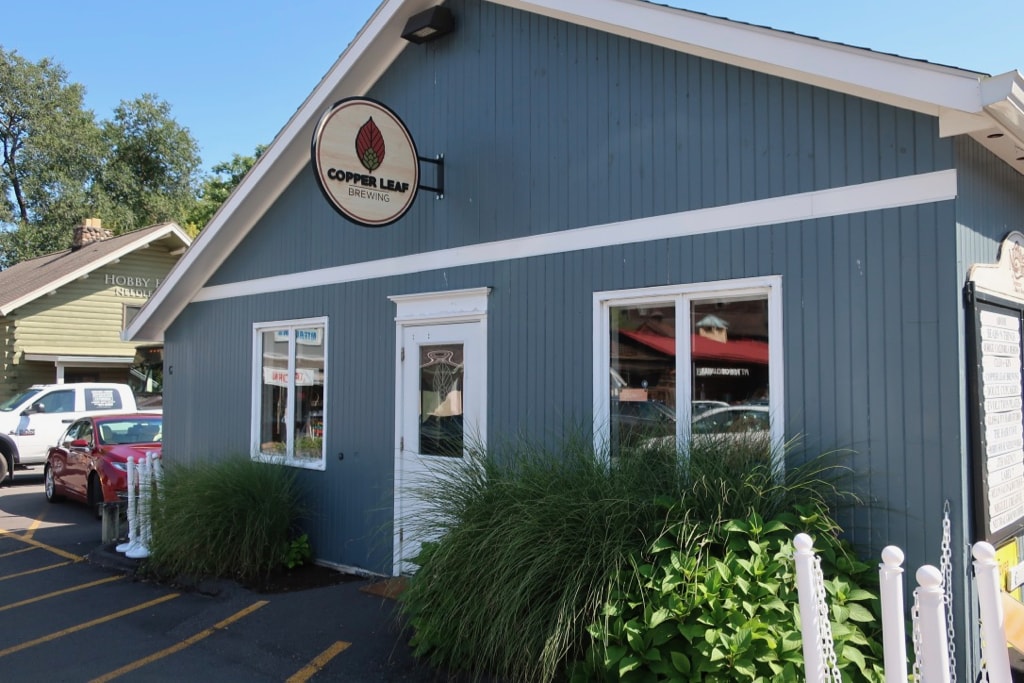
Copper Leaf Brewing
Craft brewery featuring a bar counter made from an ancient, beloved Pittsford Copper Leaf Tree that had to be cut down due to disease.
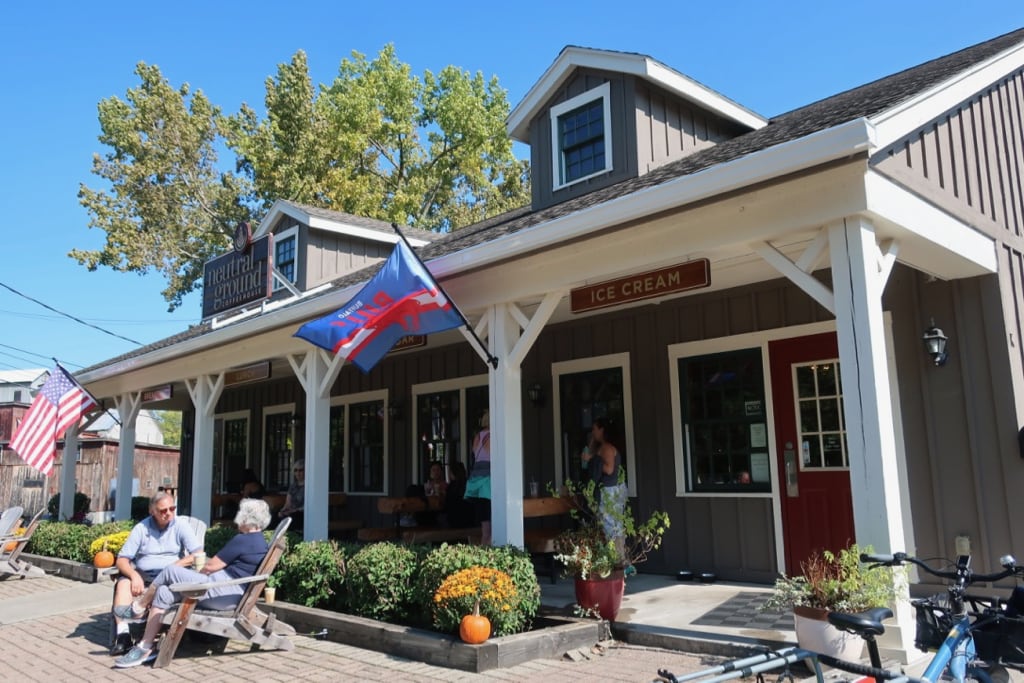
Neutral Ground Coffeehouse
Full coffee bar and café owned by creative cancer survivor, Marianne.
More Spots in Pittsford
Lock 32 Brewing, and Pittsford Farms Dairy & Bakery around the corner on Main Street.
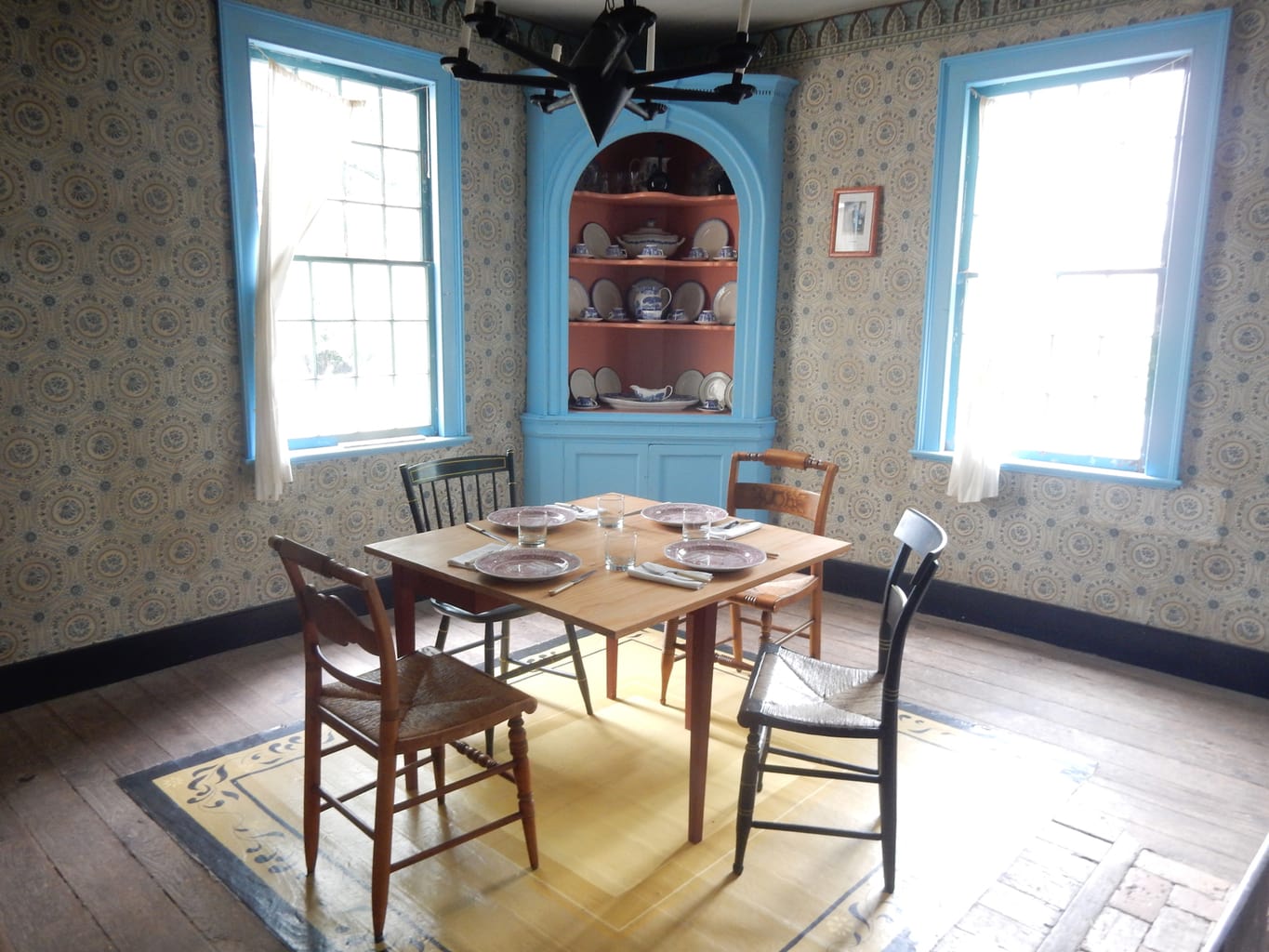
TOUR: Genesee Country Village and Museum, Mumford (about 30 minutes southwest of Rochester)
Looking for a unique, fun date night? Hosmer’s Inn at Genesee Country Village and Museum, offers a 7-course 19th century meal and parlor games on select Friday and Saturday nights in Spring and Summer.
But don’t just arrange for a dinner and then leave. The GCVM is the third largest living history museum in the USA in number of historic buildings, after Williamsburg and Greenfield Village, and deserves a full day of exploration.
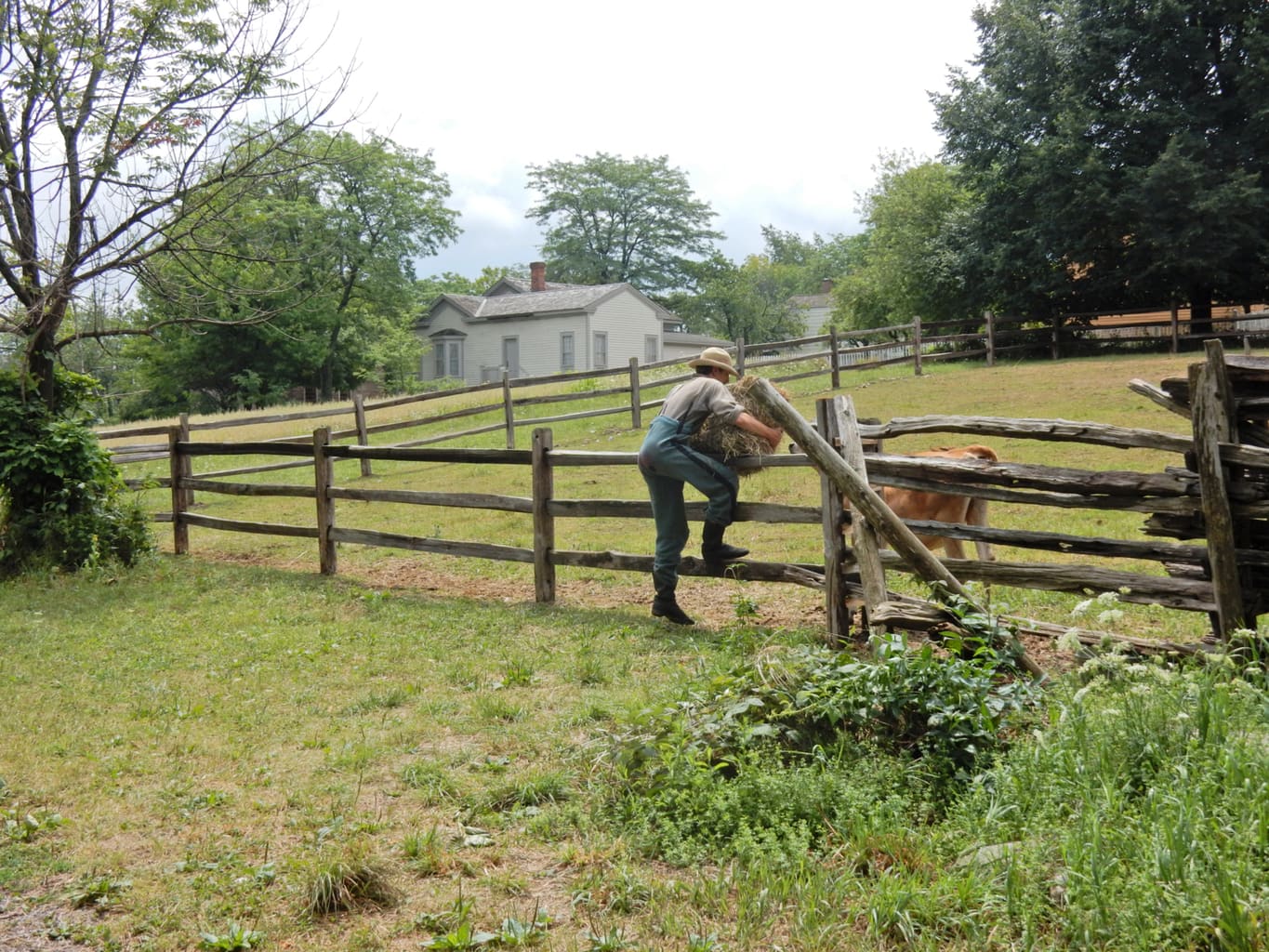
You’ll want to explore all 68 pedigreed historic buildings on 20 acres, from mid-May to Mid October, when costumed docents bustle around, tending to the duties of a working 19th century village.
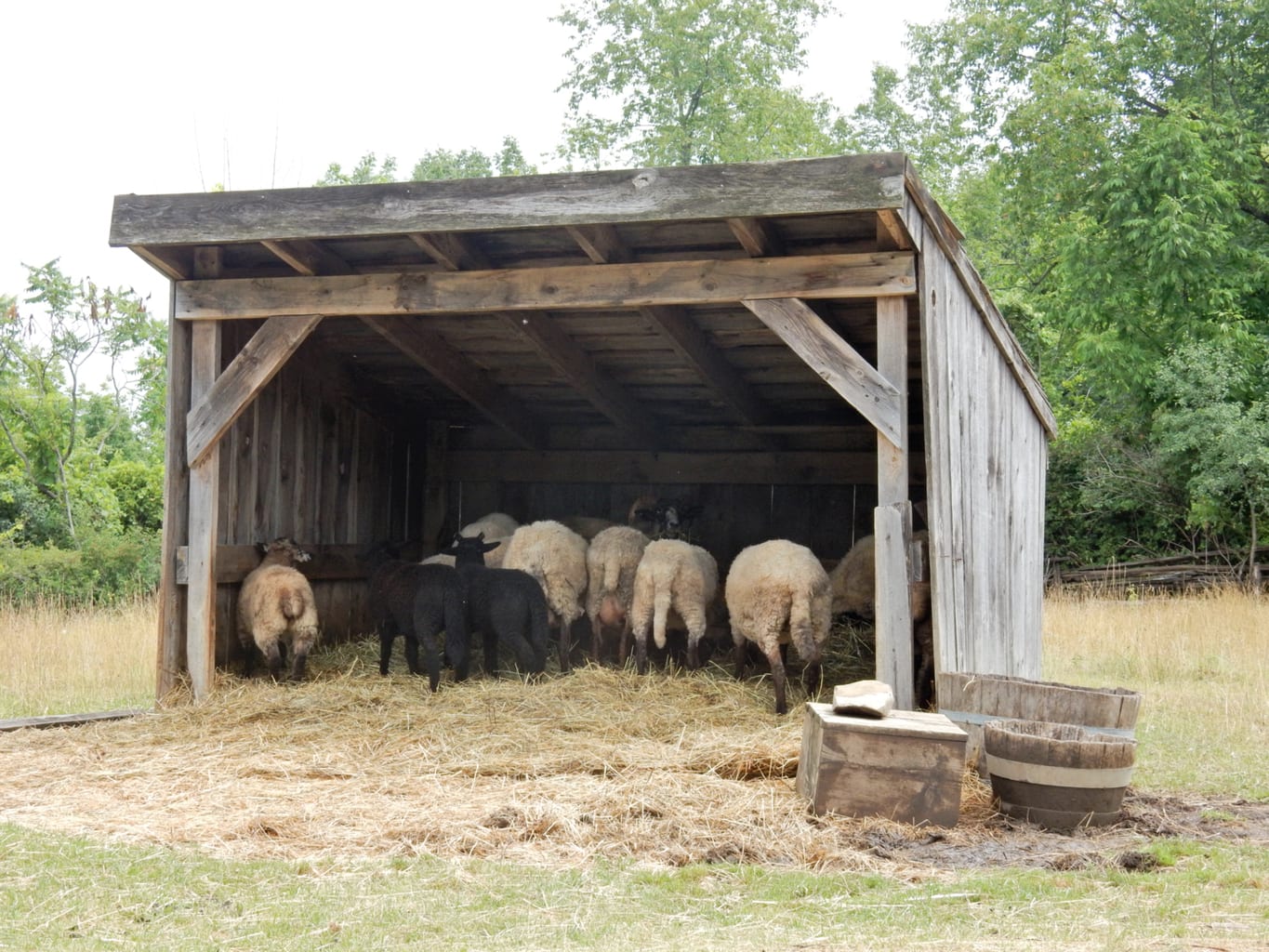
Genesee Country Village was founded with the goal of preserving and sharing architecture of the Genesee region. Historians interpret three time periods – Pioneer from late 1700’s to early 1800’s, the Canal Era (1820’s – 1860’s) and the Gaslight – Victorian Era (1870’s – 1910’s).
Each day, 19 different buildings are staffed. Others are open for self-guided tours. You’ll find the whole gamut of village life – houses, businesses, shops, breweries and taverns – a boon for visitors.
John L. Wehle Gallery
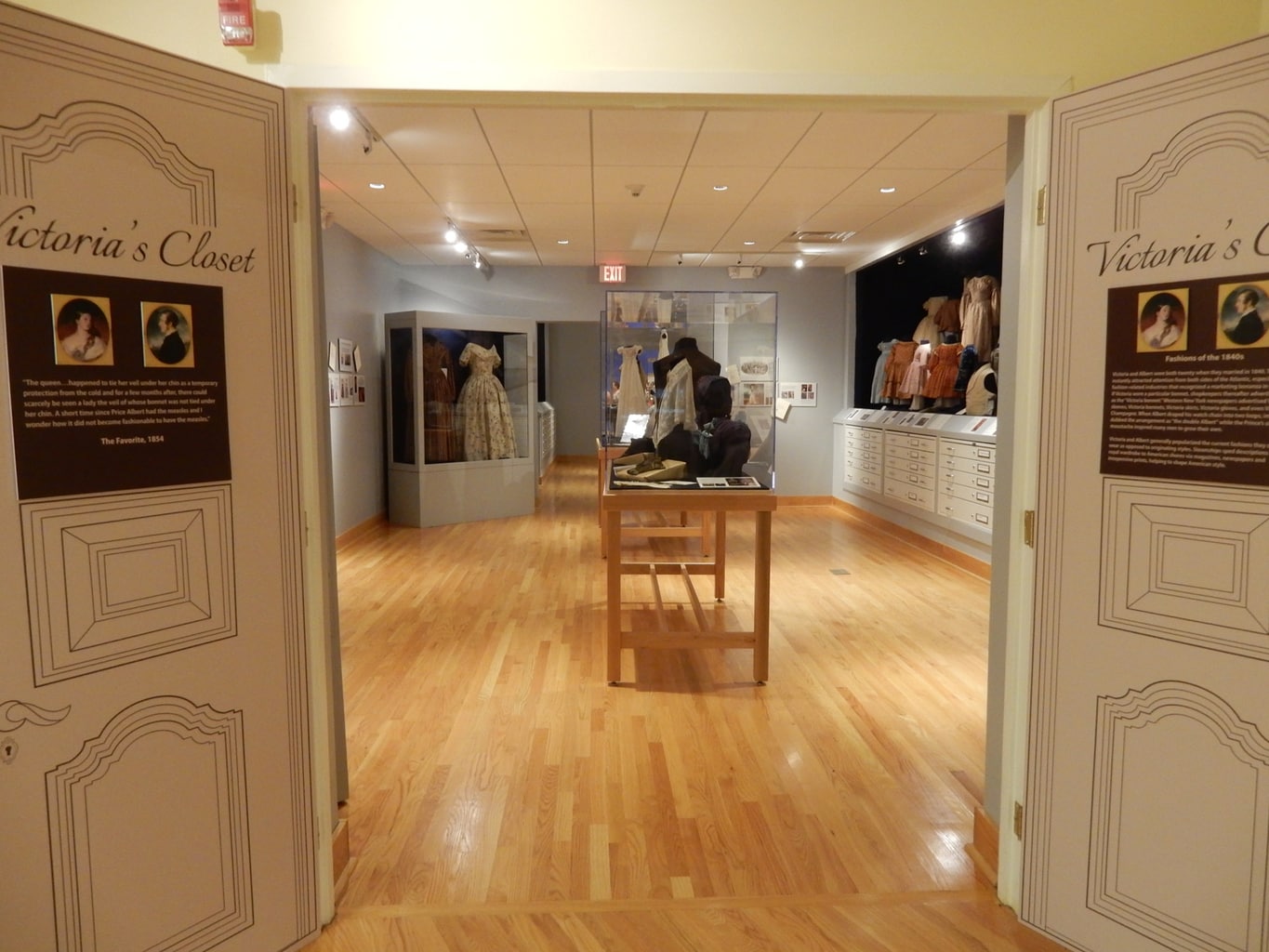
Your first stop should be the John L. Wehle Gallery just past the Visitor’s Center. Renewed and expanded in 2013, it features wildlife, hunting, and fishing related art and artifacts, and over 3,000 articles of 19th century clothing and accessories (from Susan Greene collection) in bright galleries. Get your bearings before continuing on.
George Eastman’s Greek Revival childhood home
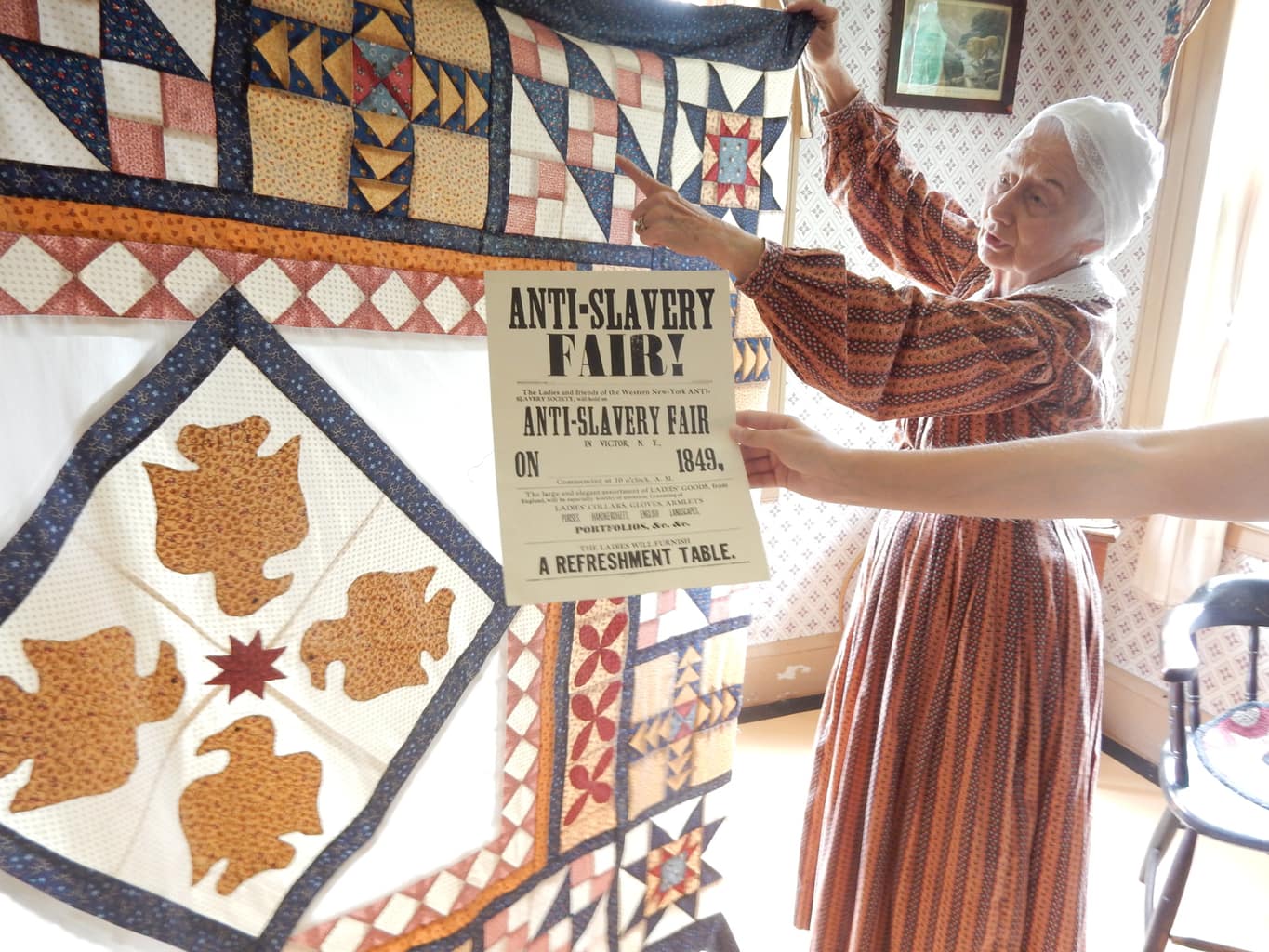
Among the most popular buildings in the complex is George Eastman’s Greek Revival childhood home where he lived from birth to six years old, transported here from Waterville. Eastman’s mother was an abolitionist who sewed quilts to raise money at anti-slavery fairs. Now, volunteers create all the quilts that are found throughout the village.
Genesee Village Programming
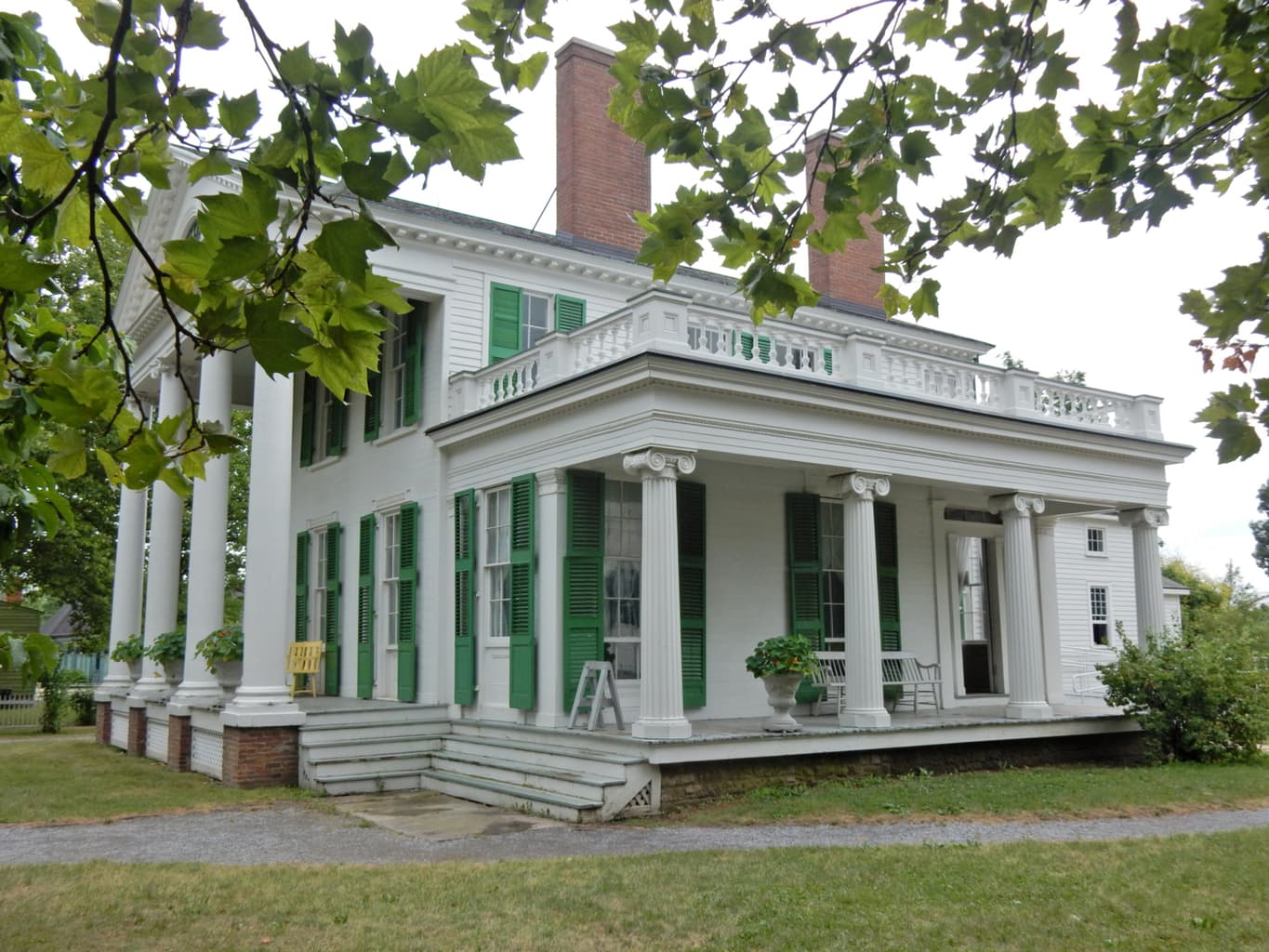
If you’re short on time, be sure to see the highlights. The iconic octagon Hyde House is the most photographed building in the museum. The Livingston Bacus home, a large urban house with fantastic carved wood banister, belonged to the second doctor in Rochester.
Hosmer’s Tavern, mentioned above, was once on Route 5 between Avon and Caledonia. Also “on campus,” find miles of marked Nature Trails and Grieve’s Brewery – America’s only operational 19th Century Brewery that utilizes strictly handmade wood and copper equipment, liquid is hand-pumped, and the brew kettle is word fired.
This living history museum offers lots of programming throughout the season. These include classes in Domestic Skills of the day, and the uber-popular “Soldier Camp” for youth. Check website for hours/dates open, events and programming, ticket and entry costs.
Restaurants in and Around Rochester NY
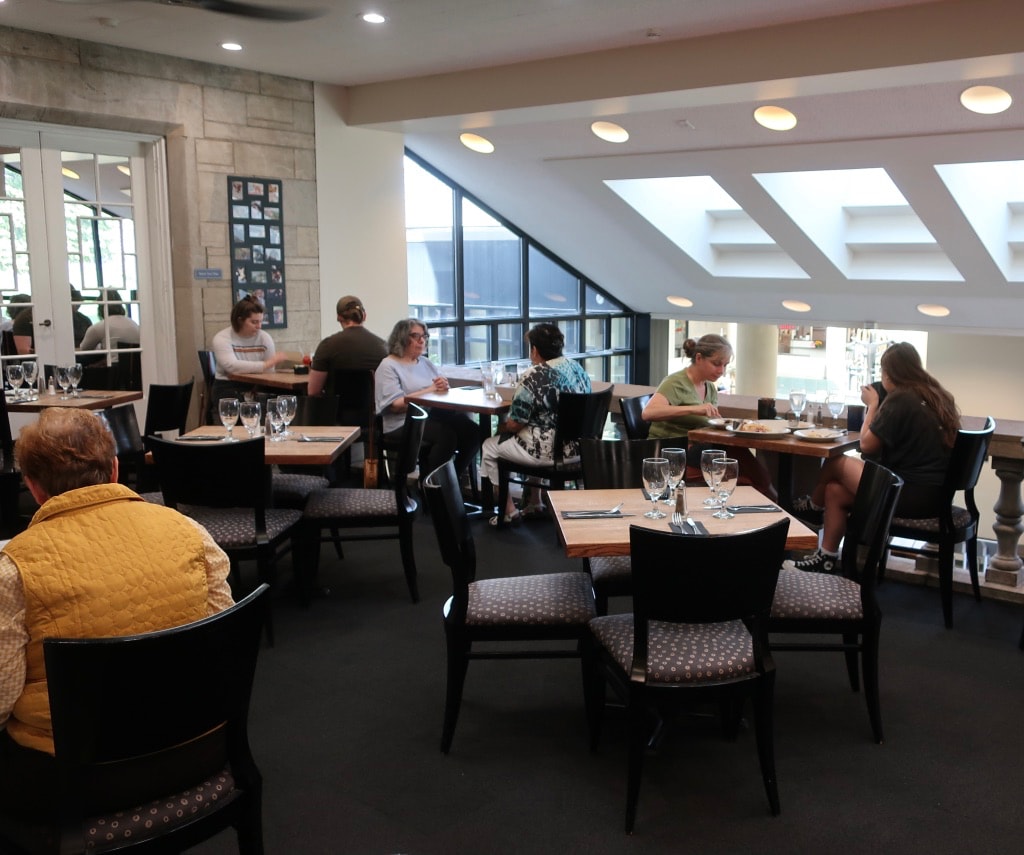
EAT/LUNCH: Brown Hound Downtown, inside the Memorial Art Gallery
The Memorial Art Gallery outpost of Brown Hound Downtown is not such a well-kept secret. It is, however, one of the best meals to be had in the area, made better by exceptional, friendly service and plenty of surrounding art. My BLT was, to my surprise, heavy on the B (bacon): crispy and flavorful, just as it should be.
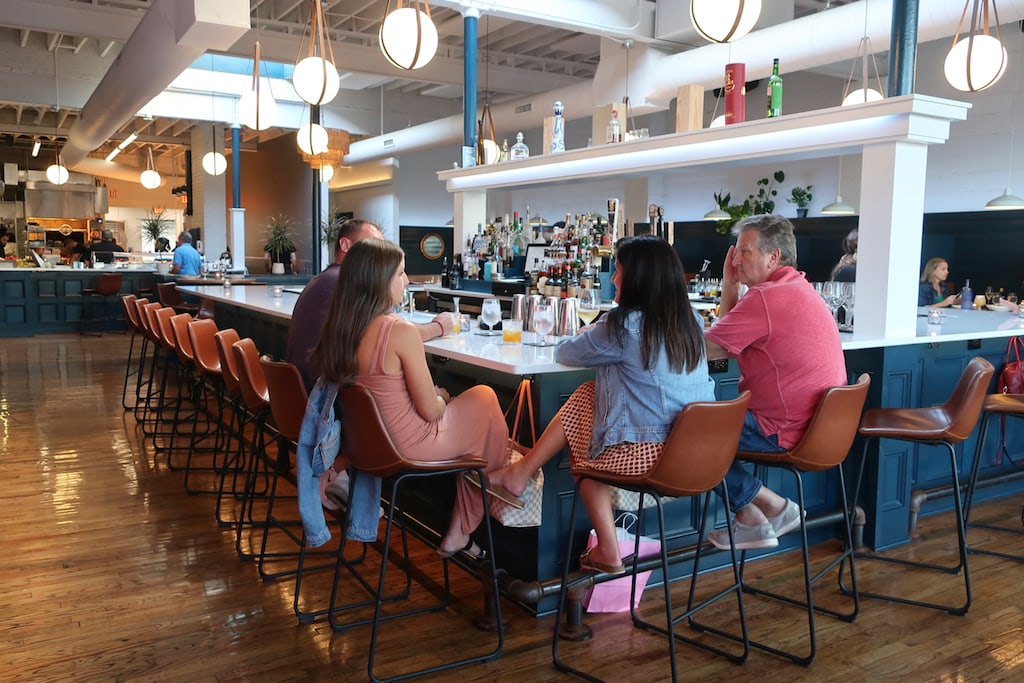
Velvet Belly, Rochester Public Market
Named for the small Velvet Belly Lantern Shark, this purveyor of coastal cuisine (read: seafood) from around the world also offers whimsical cocktails and a sense of fun. Part of the thriving food and beverage community within Rochester’s Public Market, Velvet Belly is chic and urban, with a large central rectangular bar, sushi bar, and woodfire oven.
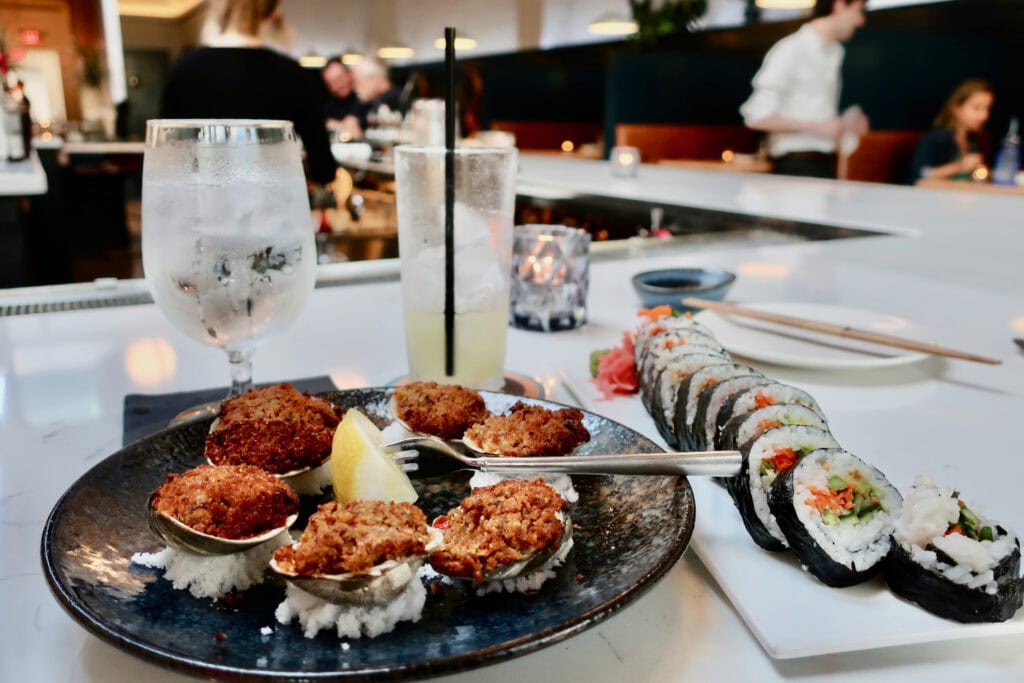
Fan favorite is the signature Stuffed Calamari, but most plates, small and large, are mouthwatering.
EAT: Mercantile on Main
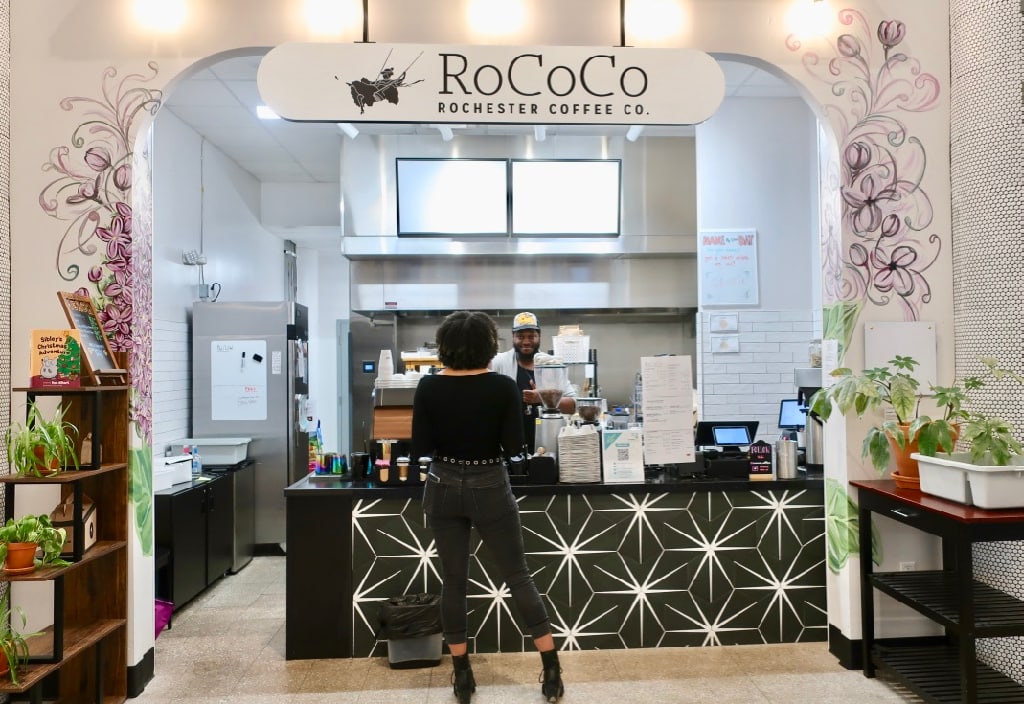
It seems that the “incubator restaurant,” upscale food court craze is sweeping the globe, and it’s found a home in Rochester at Mercantile On Main. Part of Sibley Square, this “cashless environment” was conceived for the times, with social distancing in mind. Vendors dish out their specialties in a vast, communal space. According to it’s tagline, The Merc is where “Rochester Meets to Eat.” Start your day with a cuppa joe from Rochester Coffee Company – RoCoCo.
EAT: Jine’s
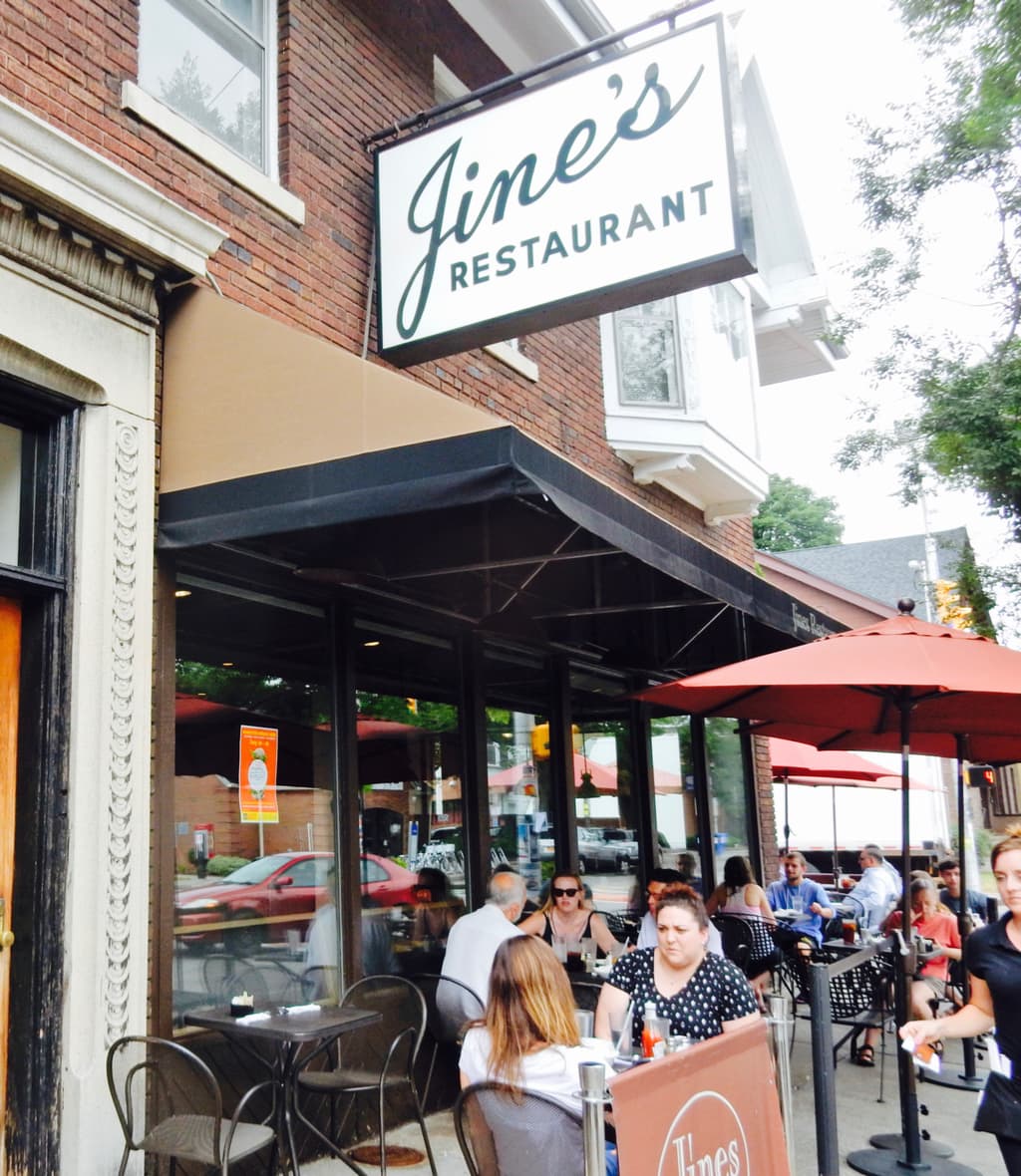
There’s usually a line out of the door of Jine’s, a city institution, opened in 1971 before Park Ave. was trendy. Now, it’s a popular modernized Greek diner-type eatery frequented by young professionals, parents with kids, ladies who lunch…everyone really. With a book-length menu and “breakfast all day,” Jine’s is a local hangout, and busy at all hours.
EAT/PHOTO OP: 1872 Café Rochester NY
The 1872 Cafe is a pizza place named for the year that Susan B. Anthony voted, and yes, the pizza’s pretty decent, too.
EAT: Locals Love
With nearly 500 restaurants in Rochester – it’s tough to land on just a few standouts. There are many, including The Owl House, Tapas 177, Nosh, and more.
Where to Stay in Rochester NY
STAY: Ellwanger Estate, Rochester NY
The Ellwanger Estate B&B was the former home of Rochester socialite, Helen Ellwanger, founder of the Landmark Society of Western NY and wife of horticulturist George Ellwanger. It sits very near the park-like Mount Hope Cemetery – where Susan B. Anthony and Frederick Douglas are buried – in a historic and wealthy section of Rochester.
First built as a farmhouse in 1817, and then purchased and enlarged by Ellwanger (co owner of Ellwanger and Barry Nurseries) in 1867 and 1910, staying here is an immersion into the wealthy lifestyle of the Victorian Age. The gardens, as one would imagine, are beautiful.
Who stays here? Business travelers, honeymooners, romantic couples, and anyone who favors sleeping on firm organic mattresses. Children over 8 are welcome, and in fact, Janofsky “loves to cook for kids.” If a television film crew is in town, chances are they choose to stay here. Just recently, Dateline came to investigate a Rochester murder mystery. When I arrived in late July 2018, the TLC Network (Say Yes to the Dress, etc.) had been using the Ellwanger Estate as its Western NY base for a month.
First Impressions of The Ellwanger Estate
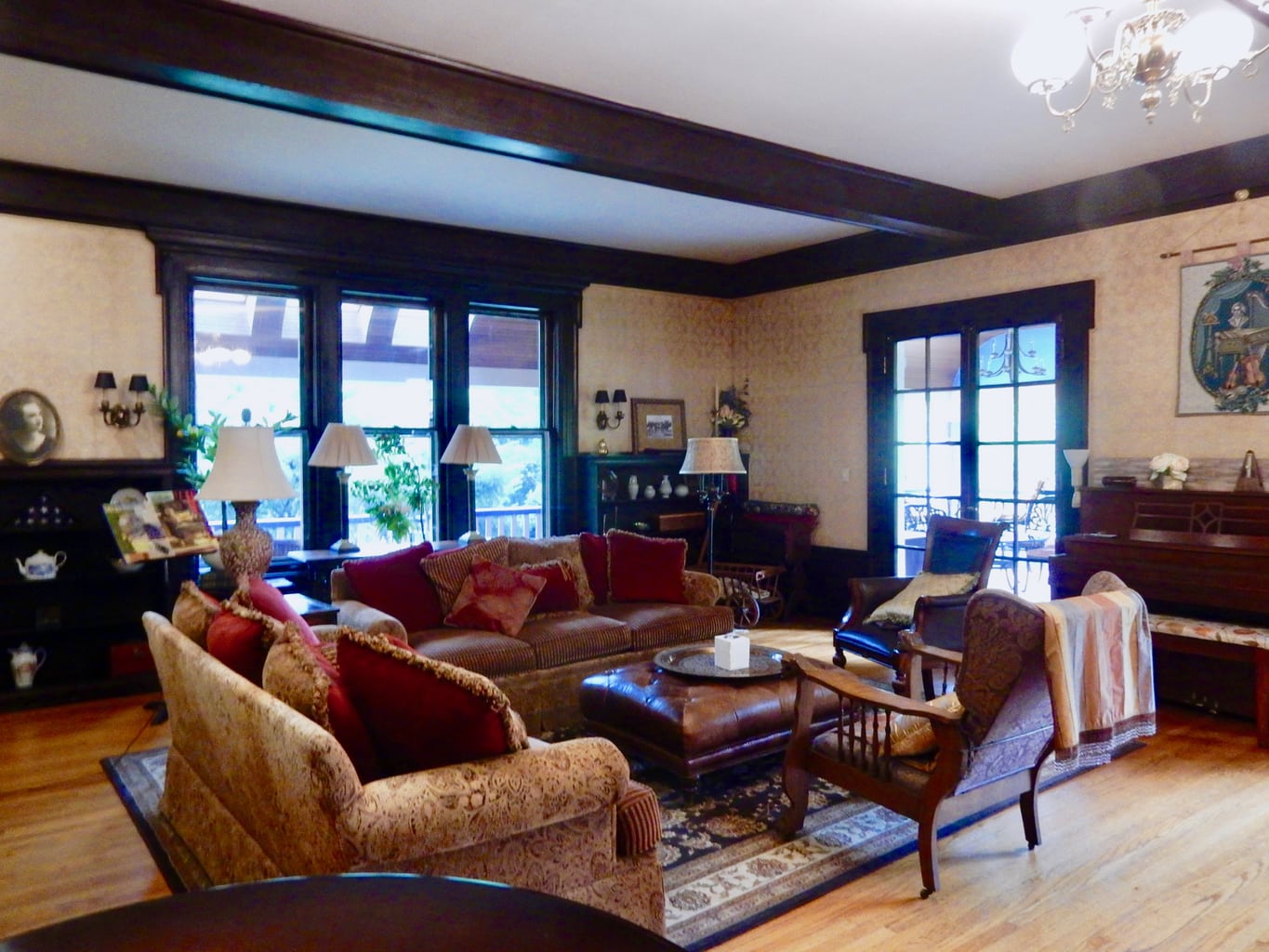
Off the main street, the driveway climbs past the Carriage House, gardens and greenhouses – the remnants of George Ellwanger’s horticulture business. Park and walk up the gravel path to the portico where Janofsky greets guests like a lady of the manor. You’re swept into a small check-in area, and then, ta-da, a door opens onto a burnished wood parlor/living room, with plenty of seating and conversation nooks.
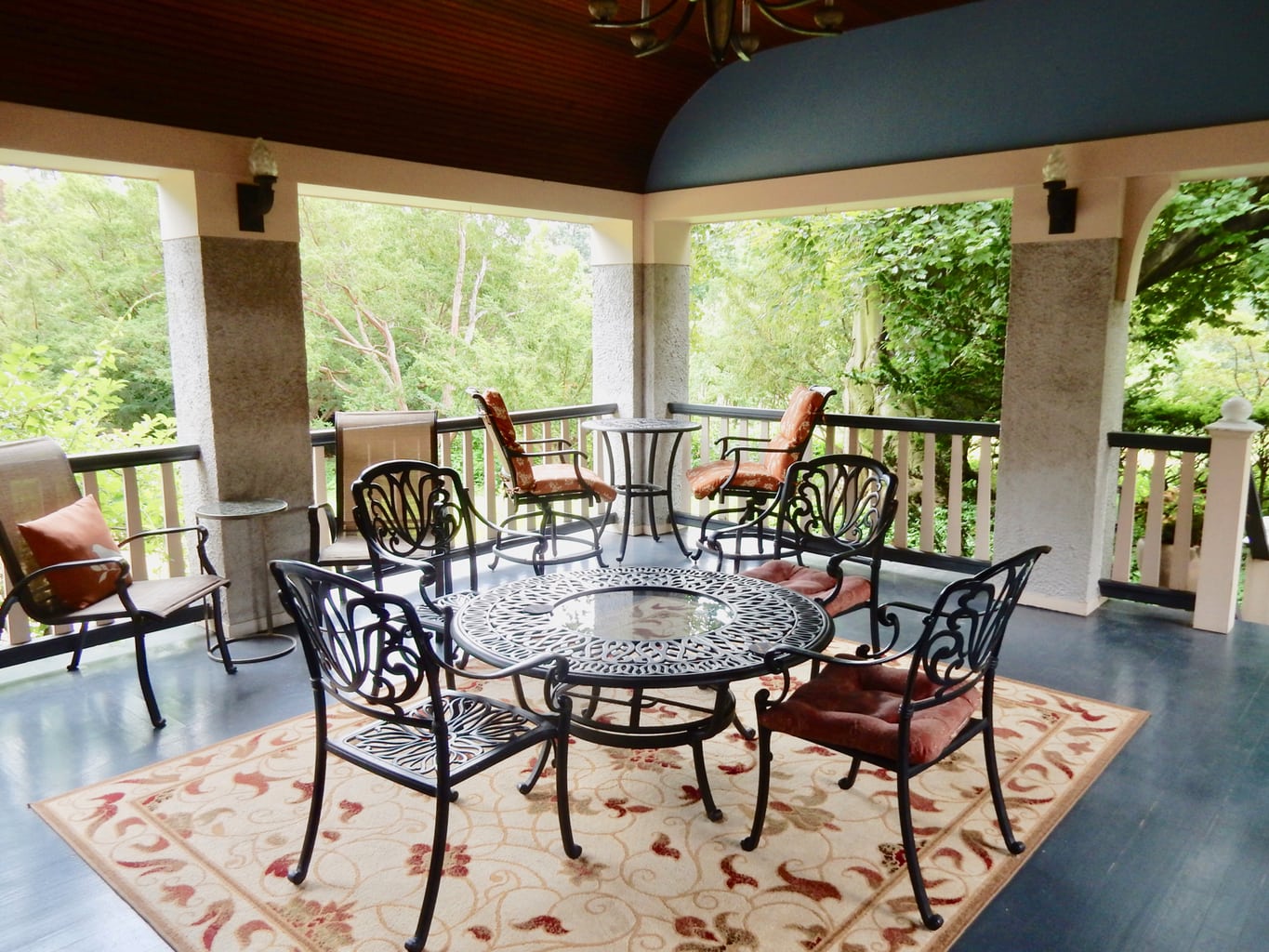
A lovely covered porch opens onto stunning gardens, and in good weather, guests can enjoy a stroll.
Rooms at Ellwanger Estate
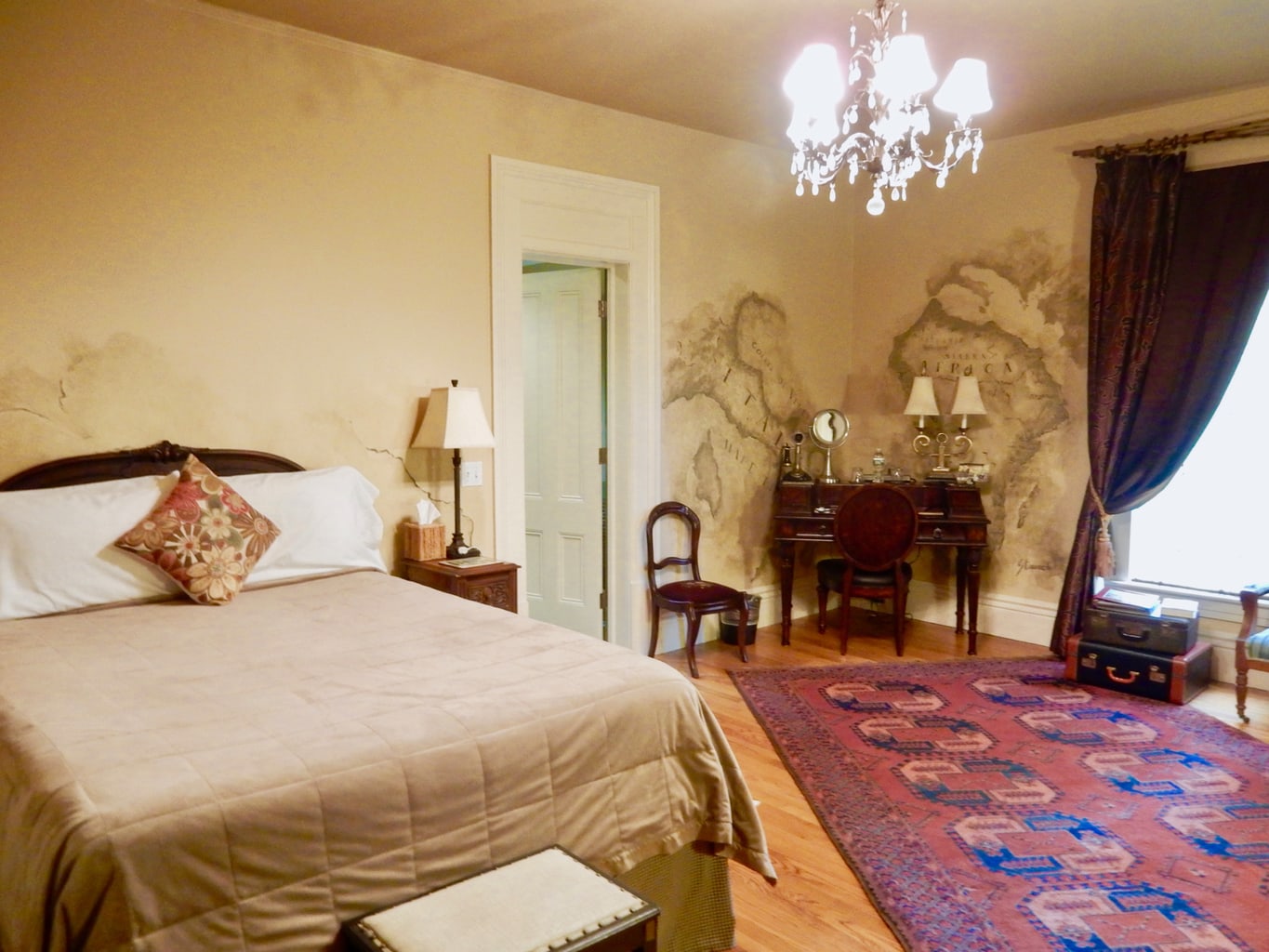
My room, Travelers Rest, was the perfect chamber for a travel writer. A map of the world covers the walls. Steamer trunks serve as display tables. Oriental Rugs cover the hardwood floor. A kimono hangs on a closed door. And Asian letters grace the wall above the fireplace mantle. Though seemingly from another era, (and with no TV), the room has plenty of outlets (power strips) for charging electronic devices, and lots of light (with switches conveniently near the bed!), which is very rare in a Victorian inn.
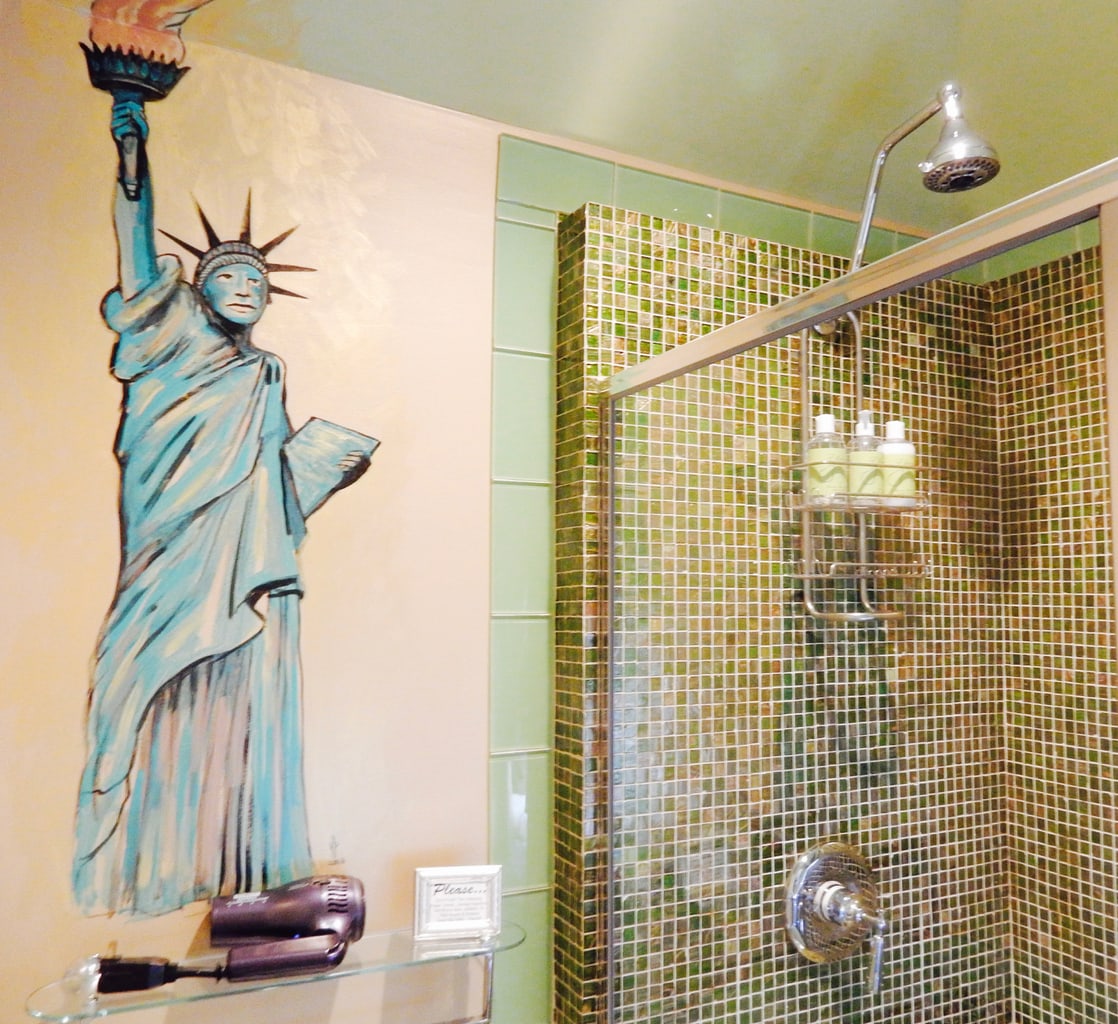
The small bathroom is delightfully whimsical. It’s clad in small green iridescent tiles, and a rendering of the Statue of Liberty.
Breakfast at Ellwanger Estate

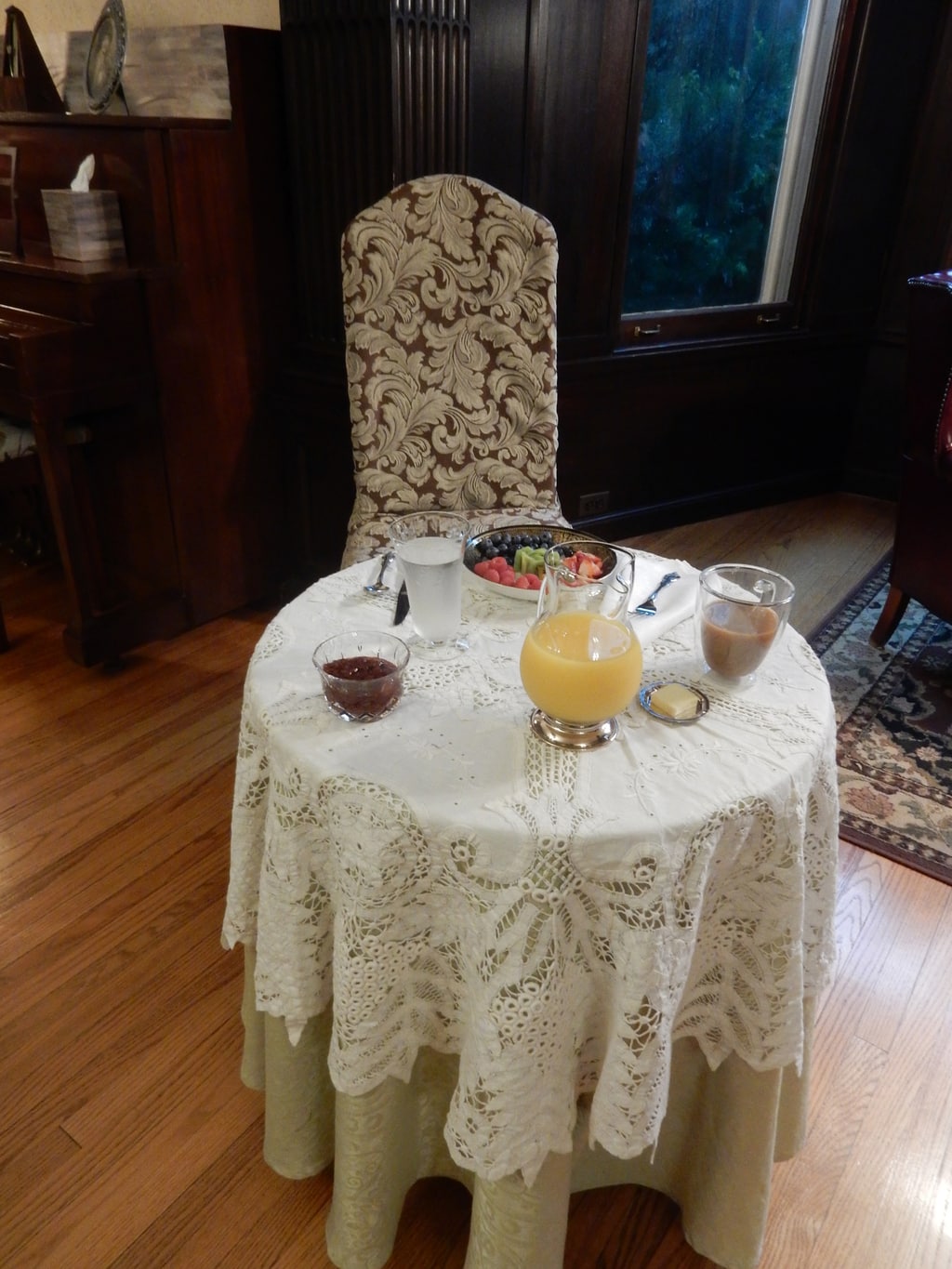
Accolades of Janofsky’s breakfasts are well deserved. So, you won’t find the customary B&B stuffed French Toast here. What you might be served is something like “Pairfection” – beautifully plated sliced poached pears with “loaded eggs” topped with bacon and blue cheese – an amalgam of palate-pleasing textures and tastes. Check website for room rates and availability.